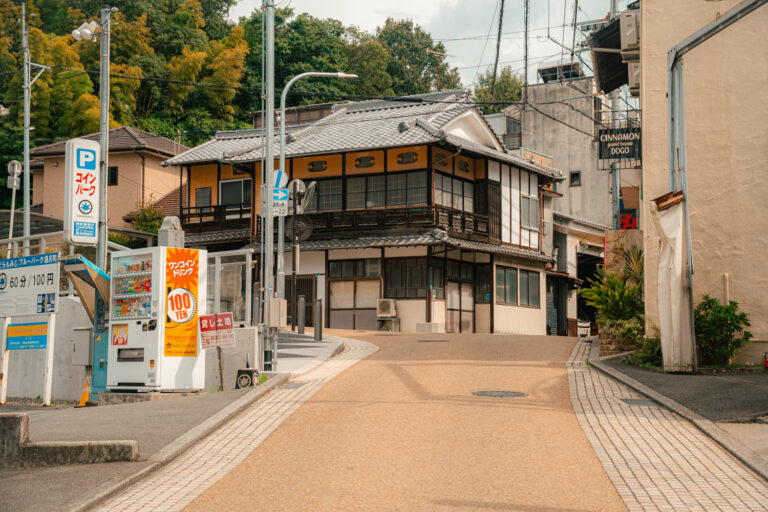
While living in Sapporo, Hokkaido, I woke up one morning with an itch for a new adventure. Noboribetsu Onsen town kept coming up in conversations with local friends; a hot spring town famous for its steaming Hell Valley (Jigokudani), sulphur clouds, and a past marked by volcanic eruptions. Its reputation for being both dramatic and restorative was too tempting to pass up. So, I booked a stay at Dai-ichi Takimotokan and jumped on a highway bus bound for one of Hokkaido’s most iconic onsen towns.
I expected it to be like a typical Japanese resort town with an intense focus on unwinding in plush ryokans, soaking in onsens, and eating grand meals. But Noboribetsu turned out to be far stranger and theatrical in every sense of the word.
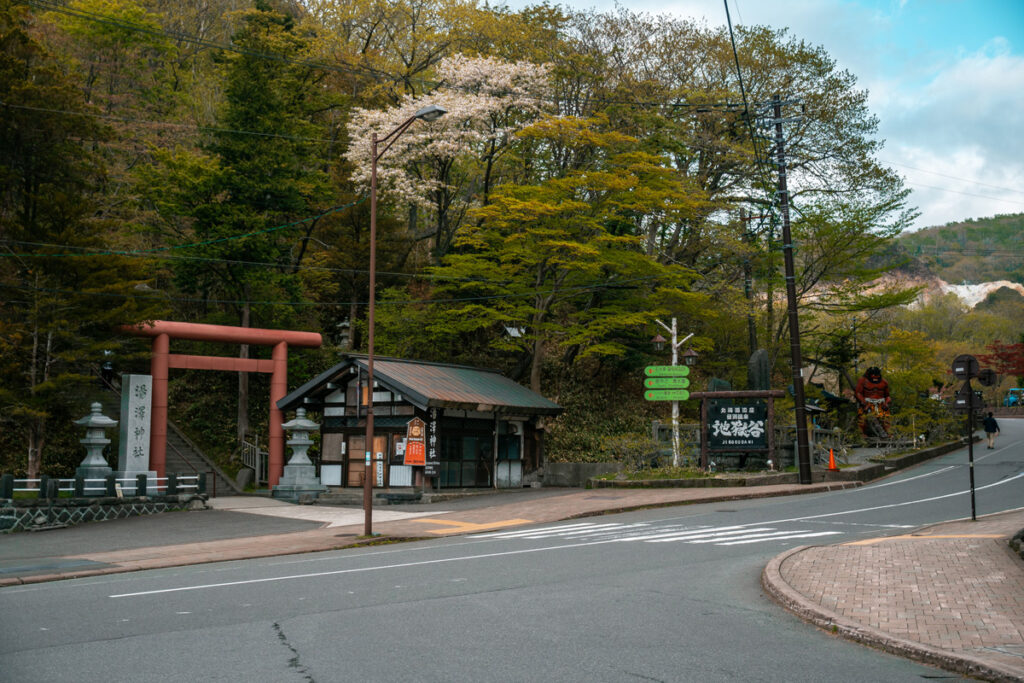
As soon as I got off the bus, I could hear steam vents hissing and filling the air with a peculiar sulphur tang. An animatronic figure loomed in the town square. And, by late evening, the fog made the streets feel like a scene out of The Mist with deer ambling around. Since I’m a sucker for weird places with cinematic vibes, I instantly fell in love with Noboribetsu.

Noboribetsu Onsen Area
Just an hour from Sapporo, Noboribetsu Onsen is a surreal little town that’s obscure in all the right ways, and heavy on Japanese folklore. Domestic travelers go there in big crowds, but it also deserves far more international attention.
Noboribetsu was originally called Nupur pet in Ainu. The name evoking a river once tinted by volcanic minerals, whose unusual color and hot spring waters were seen as signs of both physical restoration and spiritual force. Today, too, the hot springs are revered for their healing power, and the whole place pulses with an undeniable energy.
The main attraction, Jigokudani (Hell Valley), might sound ominous, but walking around the steaming vents and bubbling pools is a heavenly experience. Staying true to the “underworld” theme, towering demon statues and pudgy stone monsters are sprinkled around the town, doubling as cultural icons and great photo ops.
With stays ranging from legendary hotels like Dai-ichi Takimotokan to small guesthouses, a trip to Noboribetsu can be as easy on the wallet or as luxurious as you want it to be.
So add this offbeat corner of Hokkaido to your itinerary and soak in the springs much like the Ainu once did.
Where is Noboribetsu Onsen Town?
Noboribetsu City sits in southwestern Hokkaido’s Iburi region, and near its northern edge is Noboribetsu Onsen, home to the famous Jigokudani Hell Valley. The wider city is known for its fishing and dairy industries, with fresh seafood and decadent local cheese for sale. But the real appeal of the area is, of course, the hot spring town.
Things to Do in Noboribetsu Onsen
If your dream onsen trip involves nothing more than soaking all day, Noboribetsu isn’t the place. There’s too much going on here to spend the whole visit cooped up inside a ryokan. Most of the activities are clustered within walking distance from the main square, so you won’t have to go far to find the best things to do in Noboribetsu.
1. Photograph Hell Valley (Jigokudani) and stroll along the Boardwalk
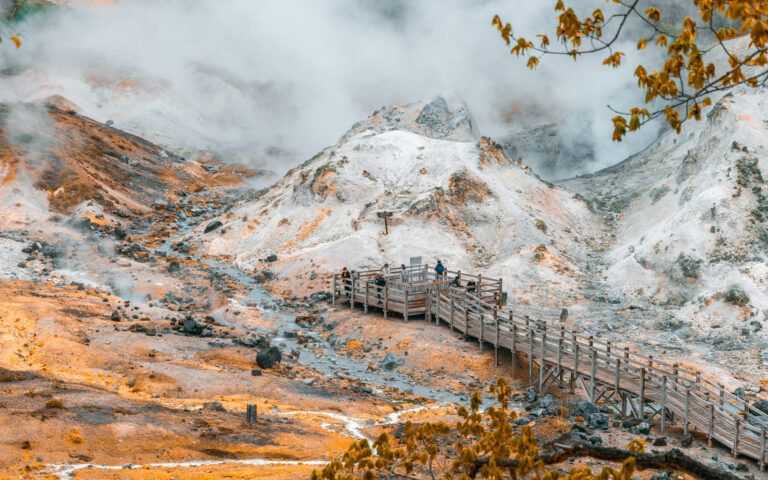
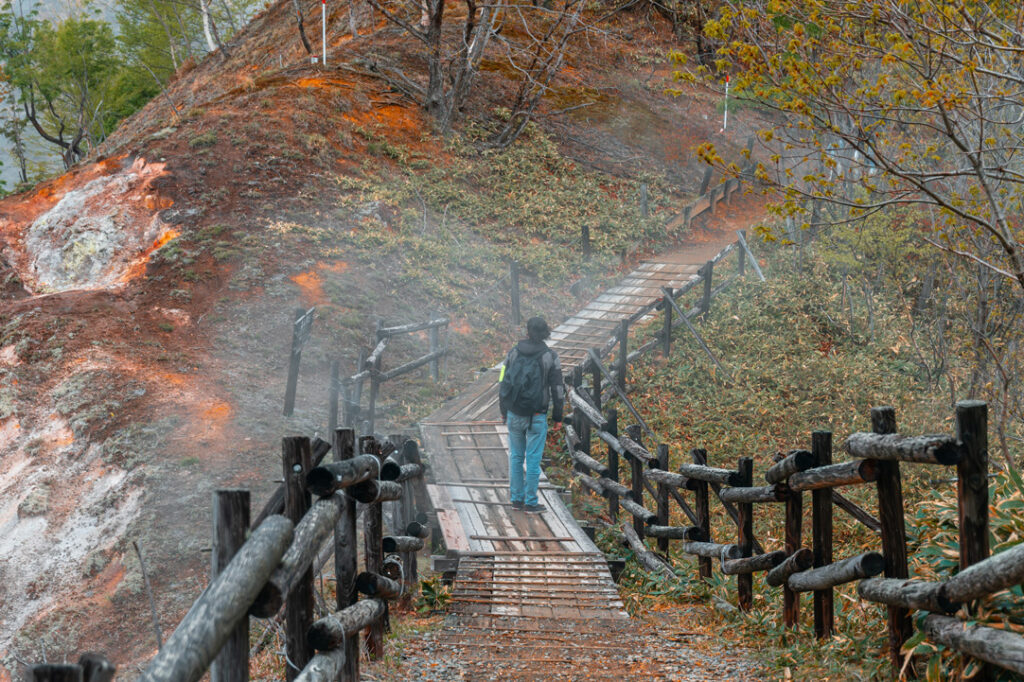
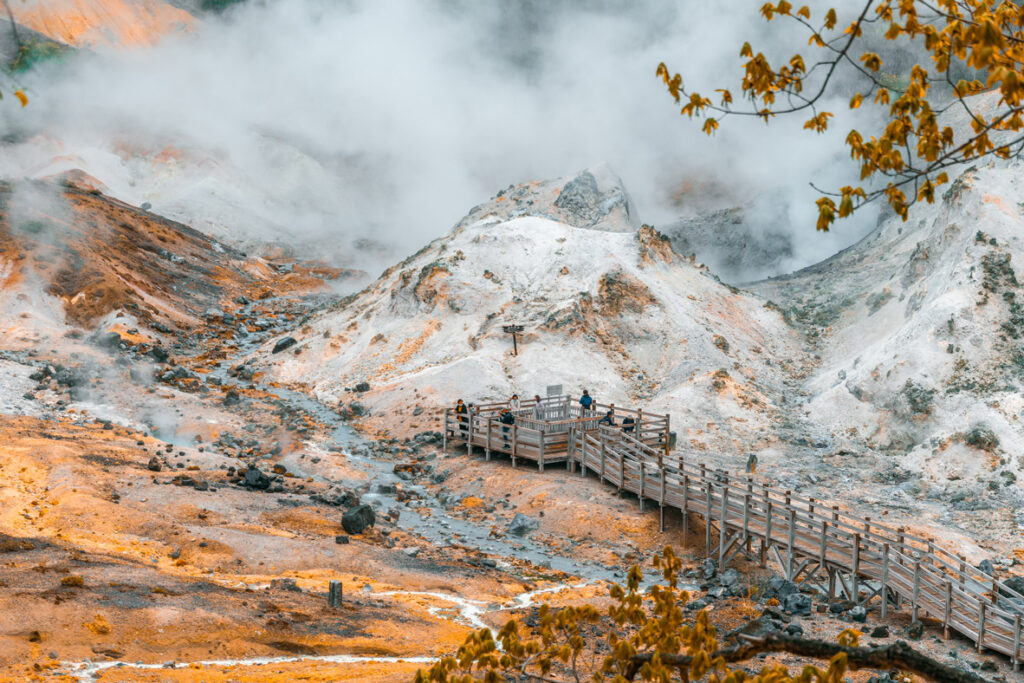
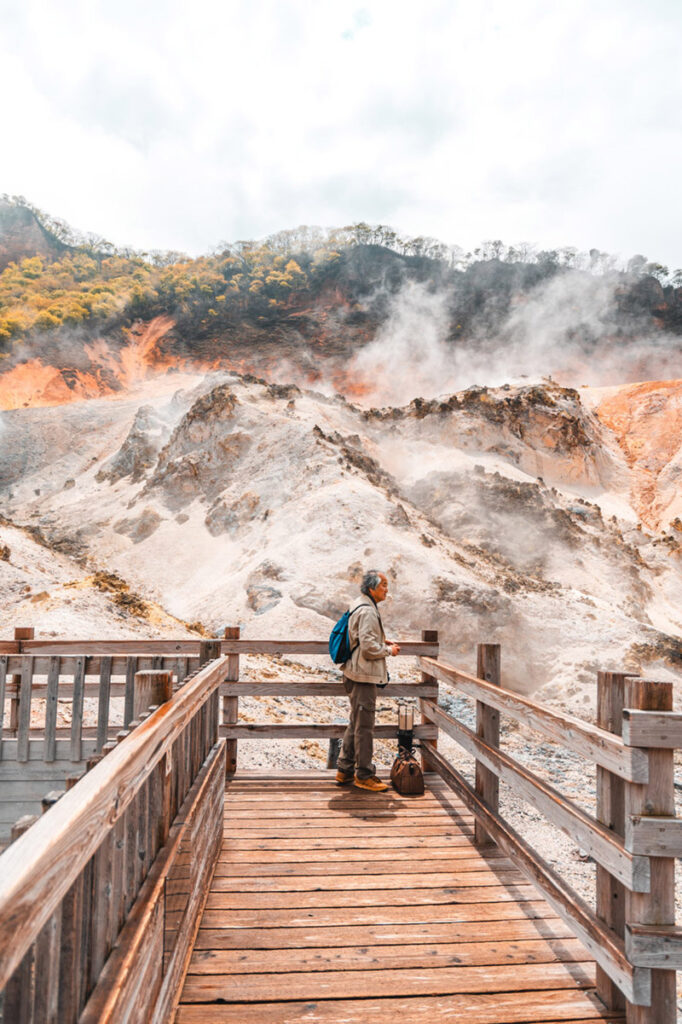
Formed by ancient volcanic activity, Noboribetsu Jigokudani Valley is a crater of smoking vents, bubbling pools, and mineral-rich springs that feed the baths of the majority of Noboribetsu’s ryokans. When I visited in May, the ground looked almost Martian, streaks of burnt orange cutting through patches of white and grey.
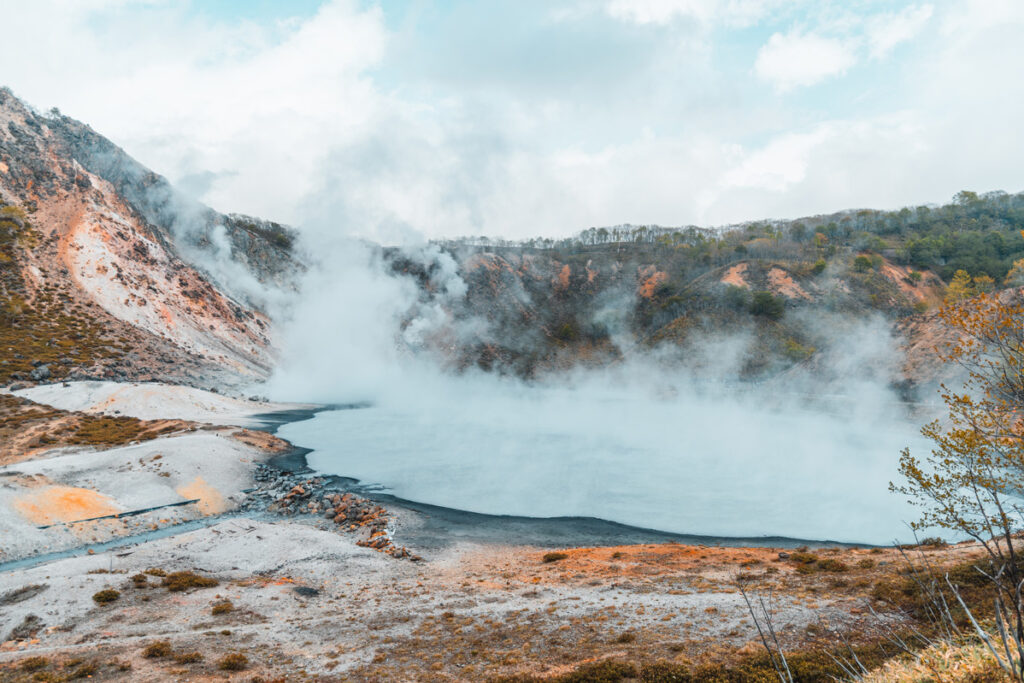
Boardwalk trails circle the valley and cross its floor, bringing you close enough to hear the hiss of gas and watch water bubbling. Further along the crater, the path transforms into a dense forest trail before opening onto Oyunuma Pond, a sulphur lake so hot it sends up steam all year. From there, a stream runs out, cooling as it flows, until it eventually becomes the Oyunuma Natural Footbath.
2. Dip Your Feet in Oyunuma Natural Footbath
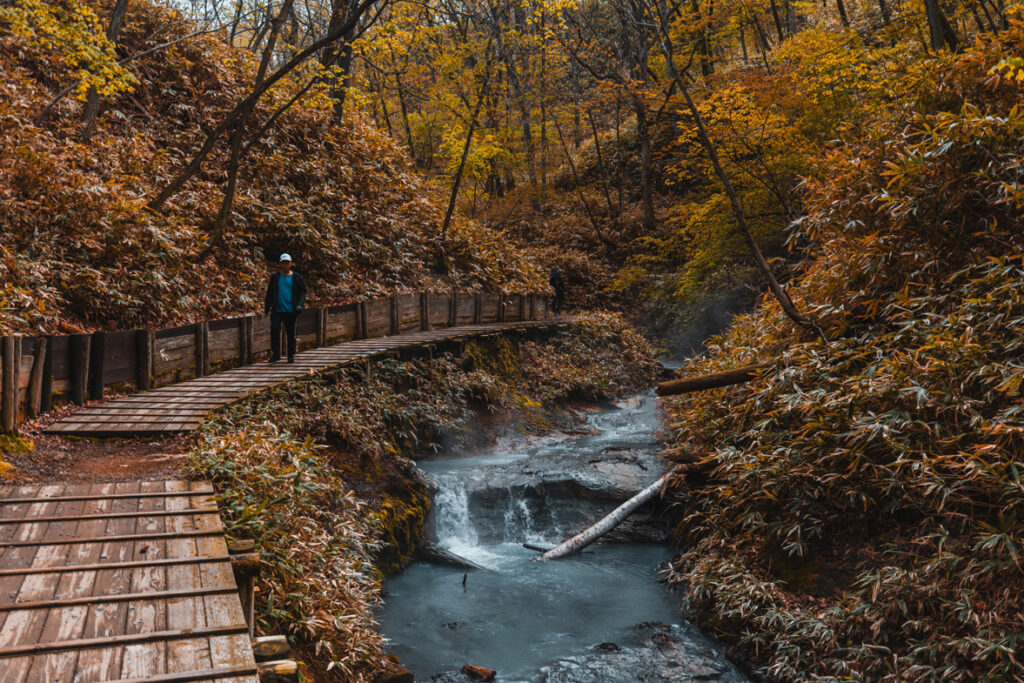
A 30min-walk from the start of hell valley takes you to a wooden deck runs along the riverbank, making it easy to kick off your shoes, roll up your trousers, and soak your legs in the warm stream. It’s free, outdoors, and one of the simplest pleasures after walking the trails around Noboribetsu Onsen town.
3. Soak in Noboribetsu Onsen’s Natural Hot Springs
Onsen culture is pretty much everywhere in Japan. But, Hokkaido takes it to an epic level, and Noboribetsu is one of the best places to dip your toes (and body) into this bucket-list Japanese ritual. I’d go so far as to say that coming all the way here and not sinking into the water would be a crime.
Noboribetsu’s hot springs bubble with nearly a dozen different mineral waters, each with its own reputation. Sulphur baths smell eggy, but once you get over it, you’ll be rewarded with soft skin. Iron-rich springs are believed to restore energy. Salt baths are soothing for sore muscles, while the rarer radium waters are thought to ease fatigue. Whether you believe their powers or not, there’s something addictive about hopping between pools with different scents, colours, and textures.
Yumoto Sagiriyu Onsen is the only true public bath in Noboribetsu, and at just ¥500 it’s the most affordable way to soak in the town’s mineral-rich waters. Don’t expect a lavish spa setup though, there’s no open air baths nor a luxury wating room area. Sagiriyu is simple and retro. Bring your own shampoo, soap, and towel, otherwise you’ll need to buy them at the front desk.
If you have time, spend a night in a ryokan where the baths are the star of the show. My favourite is Dai-ichi Takimotokan with its traditional rooms and sprawling multi-floor public bath. Its grand bath has the bonus of visitors being able to buy a beer to sip while soaking. If you’re short on time, they also sell day passes for non-guests & day visitors.
4. Go Demon (Oni) Hunting
If you know me in real life, you already know about my obsession with anything monster-themed. And, keeping up with its “Hell Valley” identity, Noboribetsu Onsen has become synonymous with oni, Japan’s horned demons. Giant red and blue statues guard several areas around town.
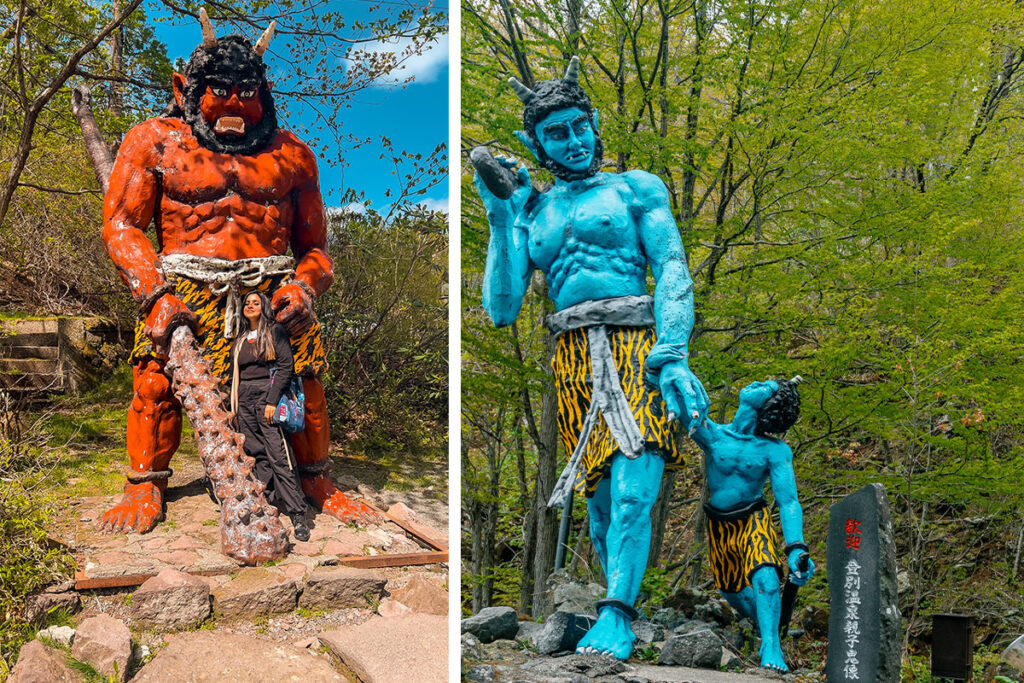
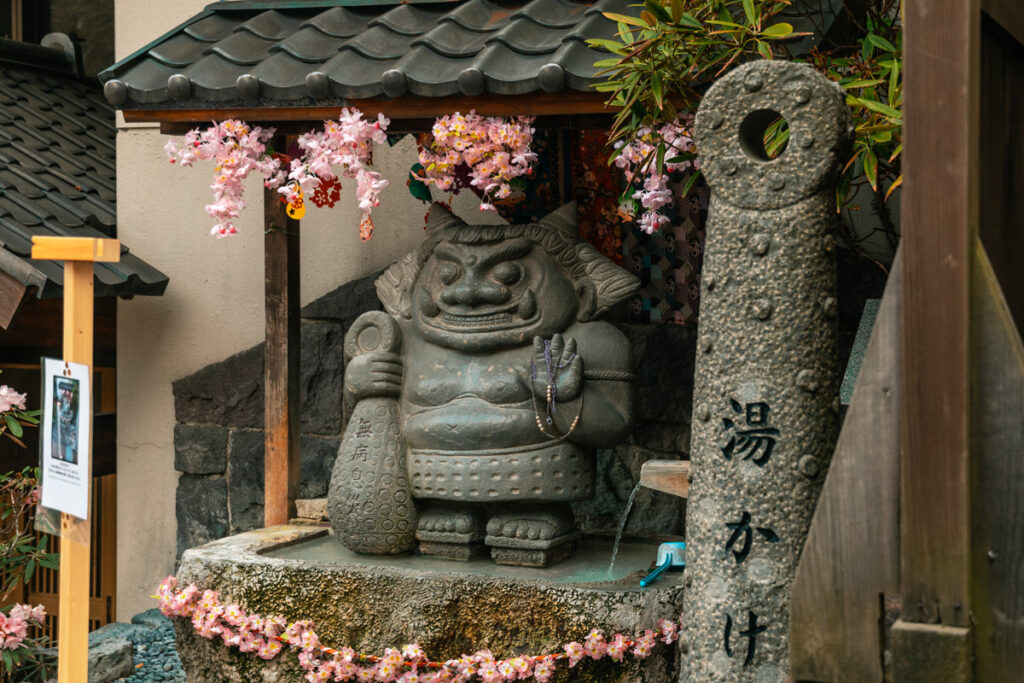
Smaller figures pop up around street corners, bridges, and shopfronts. Far from frightening, these demons are dramatic and a little goofy, and yes, perfect for photos. Supernatural fans, gather your hunting gear and go demon spotting!
5. Visit Noboribetsu Bear Park, Hokkaido
As much as I love Japan, most of the animal-themed attractions here have been tough for me to see. So, I’ve made it a rule to skip them. That meant giving the Noboribetsu Bear Park a pass, too.
If you’re more relaxed about it, you can ride the ropeway up Mount Shihorei to watch Hokkaido brown bears from elevated viewing platforms. There’s also an option to feed them snacks through puzzle machines.
When I go back to Noboribetsu, I’ll take the ropeway up, not for the bears, but for the reconstructed Ainu village at the top station. Plus, the view of the forest stretching out below with steam rising from the valley is reason enough to ride up.
6. Watch Enma Come Alive at Enmadō Shrine
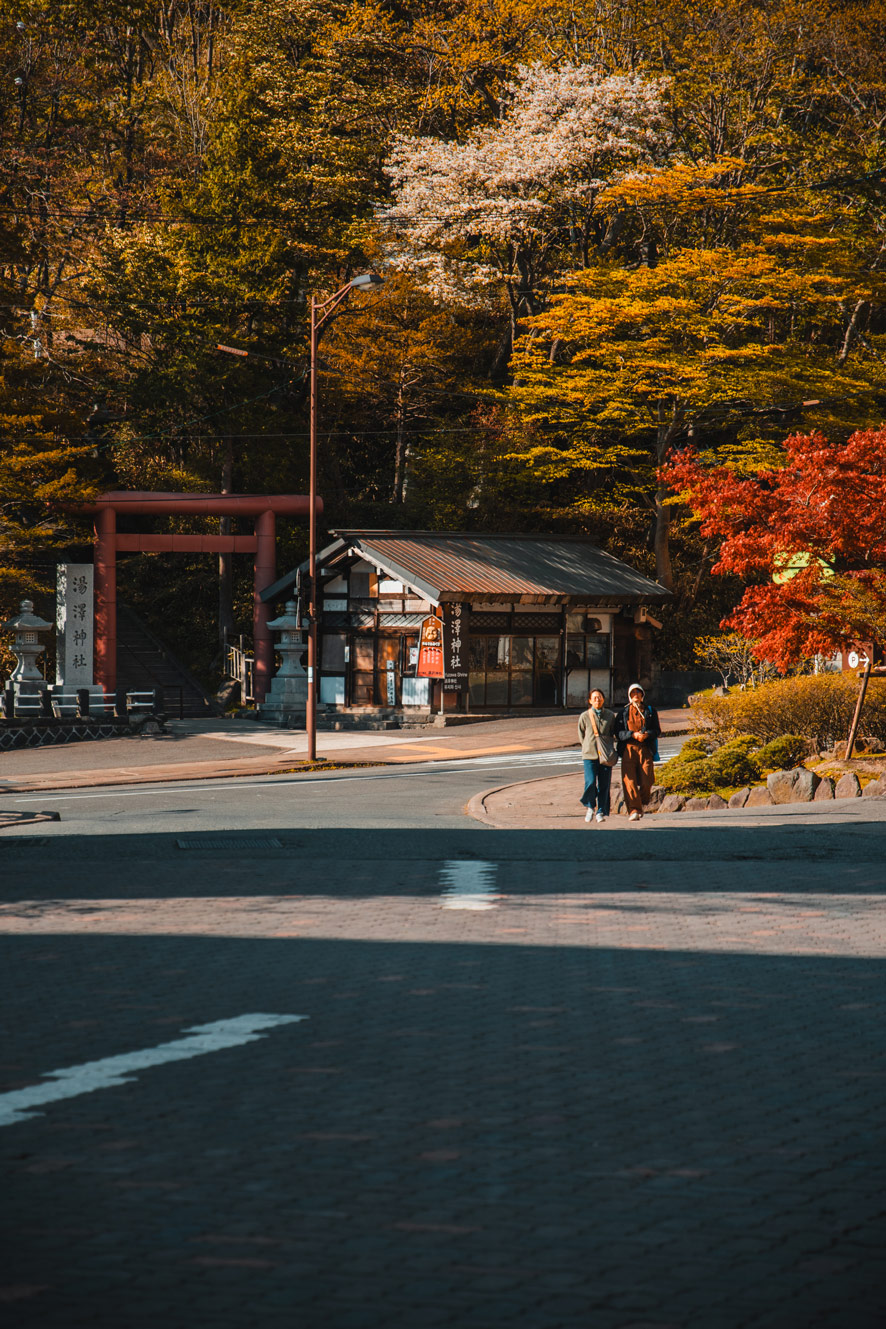
Enmadō Shrine is dedicated to Enma, the ruler of the underworld, & it fits perfectly with the kitschy vibe of Noboribetsu Onsen Town.
While walking past, I noticed a crowd gathering at the back and decided to stick around. Five minutes later, the shrine’sdeity came to life in a short performance complete with sound effects, light, and movement. The statue transforms right in front of you, and the whole thing lasts barely five minutes, but it’s pretty awesome to witness. In fact, I loved it so much I went back for the next show two hours later.
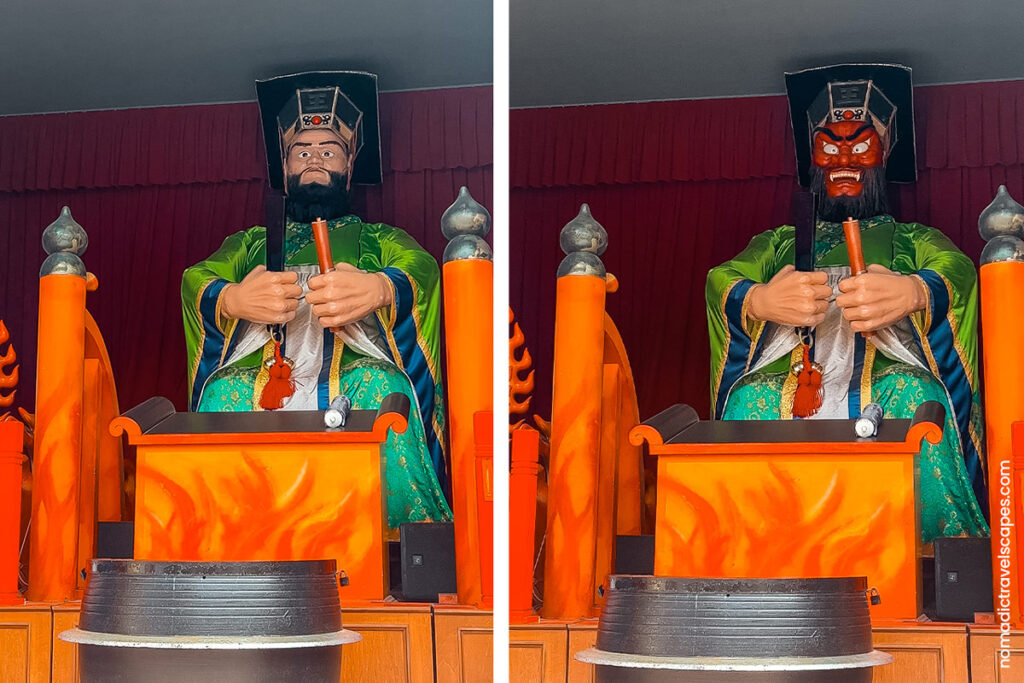
Typical showtimes are 10:00, 11:00, 13:00, 15:00, 17:00, and sometimes in the evening at 20:00 or 21:00.
7. Visit Date Jidaimura
Date Jidaimura is a recreated Edo-period town, complete with samurai residences, merchant houses, geisha quarters, and stage performances with ninjas and sword fights. Staff roam the grounds in full costume, stopping for photos with kiddos and families.
I skipped it on my trip simply because I ran out of time, but if you’re curious about Edo-era Japan in a theatrical setting, this is where to see it in Noboribetsu.
8. Take A Night Stroll in Noboribetsu Onsen
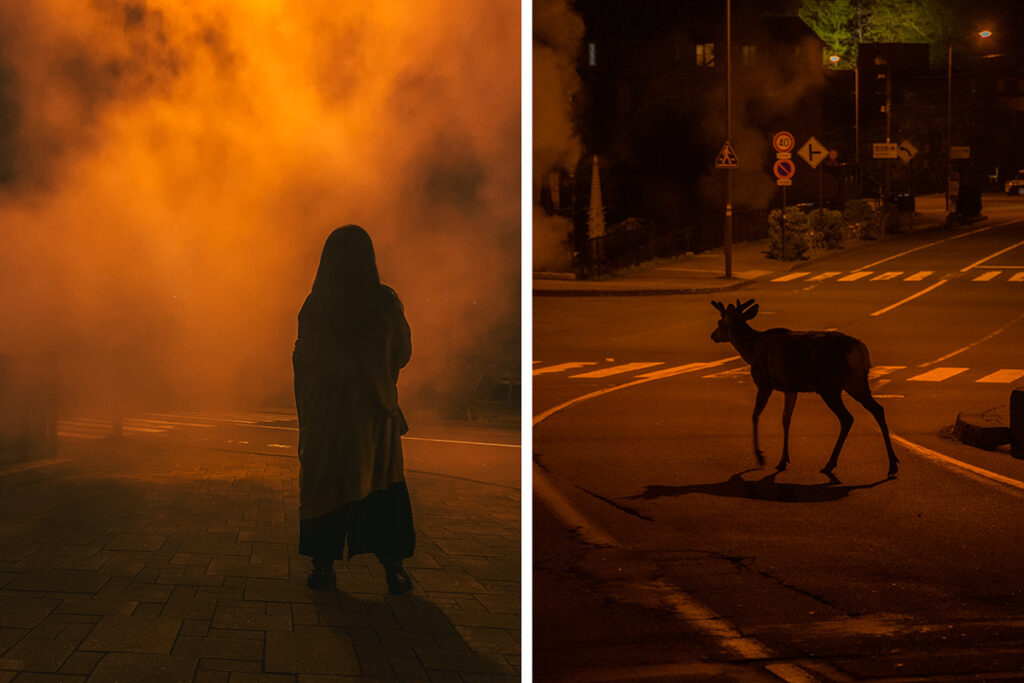
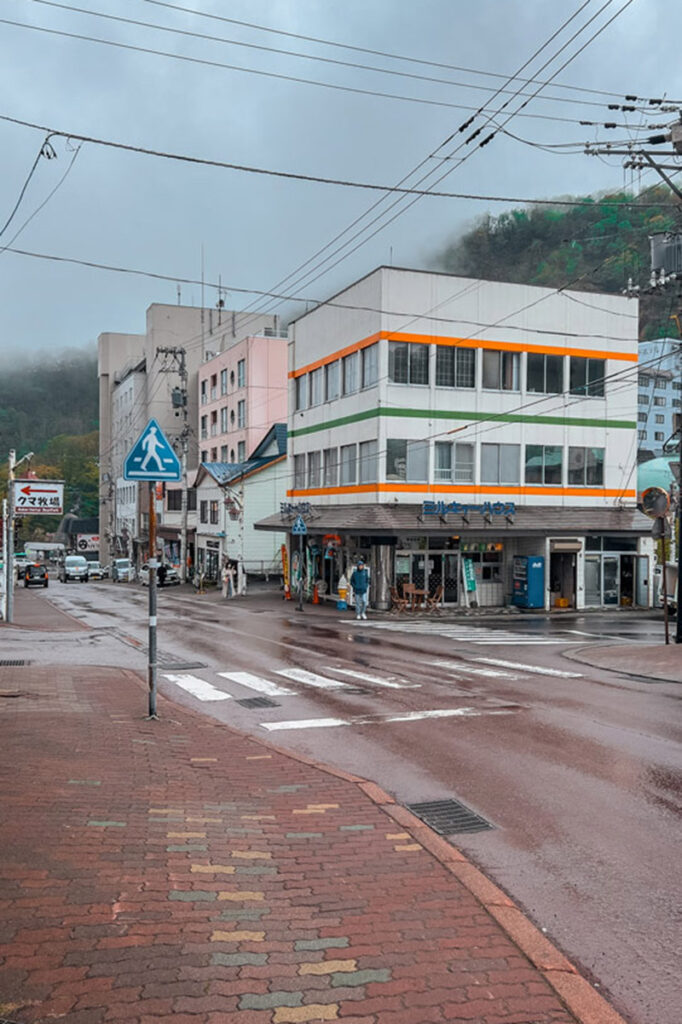
Once the fog rolls in, Noboribetsu gets a surreal makeover. Steam seeping from vents makes the streets Silent Hill-esque, deer wander through the streets, and the oni statues jut out in the haze. A slow walk at night makes you feel like you’re the main character in a thriller!
Festivals in Noboribetsu
Noboribetsu Hell Festival
Every August, the portals of hell in Noboribetsu are said to open, letting Enma and his demon minions march through the streets. The main square of Noboribetsu Onsen fills with lanterns, food stalls, and music. It’s basically a photographer’s dream and one of the festivals at the top of my bucket list. On-lookers are often pulled into the procession, so wear comfy shoes if you like dancing.
Noboribetsu Onsen Hot Water Festival
Each February, Noboribetsu hosts a two-day celebration dedicated to the hot spring waters that help locals endure Hokkaido’s brutal winters. The Hot Water Festival combines rituals of appreciation with performances and parades through town. I’ll update the dates for 2026 once they’re confirmed.
Short Walk Noboribetsu Itinerary (Free Map)
If you don’t have time for the full two-day stay, here’s a quick loop that hits Noboribetsu’s highlights in just a few hours:
- Begin at Hell Valley (Jigokudani) and take in the steaming crater views.
- Follow the forest boardwalks to Oyunuma Pond, a sulphur lake that smokes year-round.
- Rest your feet at the Oyunuma Natural Footbath.
- Time your walk to catch the animatronic show at Enmadō Shrine (best at 13:00 or 15:00).
- Wander back through town, snapping photos of the red and blue oni statues.
- Wrap up with a day pass at an onsen for a proper soak.
- End with a hearty meal. Get spicy ramen at Isekura or a pizza at Pizzeria Astra.
I’ve pinned everything on a free Google Map so you can follow the route without getting lost.
👉 Get the map in your inbox by dropping your email below. You’ll also get updates on my latest Hokkaido guides.
What to Eat Vegetarian in Noboribetsu
I won’t sugarcoat it, I love living on desserts when I’m in Japan, and Noboribetsu was no exception. With fewer street food stalls open in the off-season and most cafés serving meat-heavy plates, I happily relied on sweets for my sugar rush. But, if you’re searching for proper vegetarian meals in Noboribetsu, a handful of options exist.
Between demon spotting and onsen soaking, I only sat down for two proper meals in three days, and both were divine.
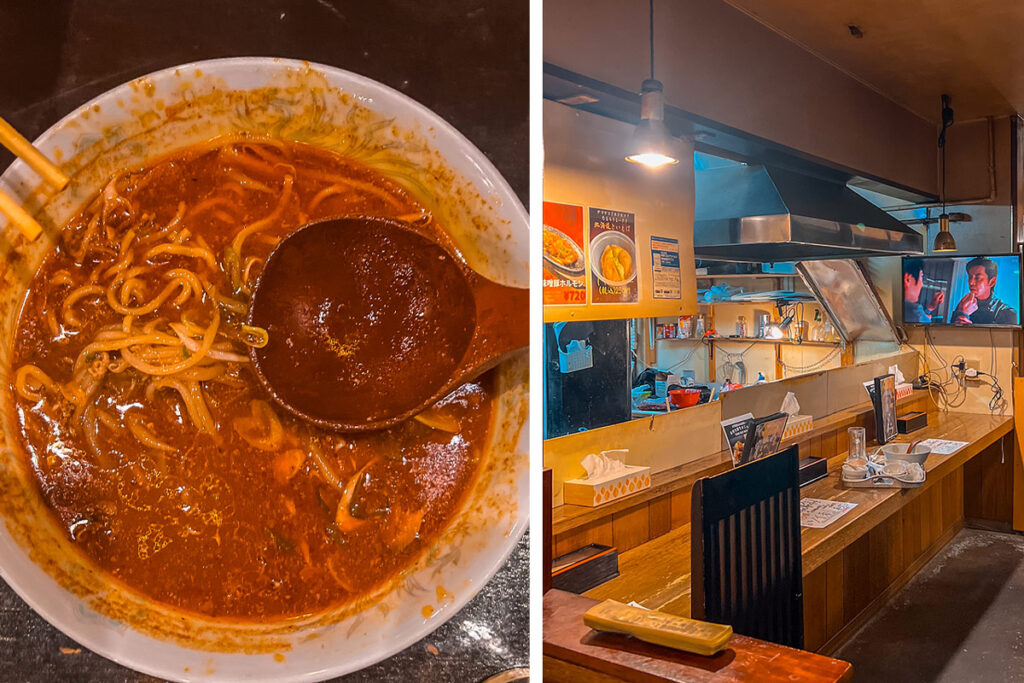
Isekura Ramen — A cozy little ramen joint where the chef kindly put together a meat-free spicy ramen for me. The broth was garlicky, the noodles were cooked just right, and the side of cheese croquettes made it my favorite meal in Noboribetsu.
📍71 Noboribetsuonsencho, Noboribetsu, Hokkaido 059-0551, Japan

Pizzeria Astra — The margherita pizza here was insane, piled with cheese and a proper Italian-style sauce. It was a little pricey and didn’t keep me full for long, but it looked and tasted like a piece of art. Absolutely a 10/10, would recommend.
📍 60 Noboribetsuonsencho, Noboribetsu
Takimotokan — I stayed here but didn’t get to try their special vegetarian kaiseki menu, since it has to be booked three days in advance. Next time I’ll plan ahead, because the spread of grilled tofu with miso, crisp vegetable tempura, and mushroom rice sounds incredible.
北登のおうどん — A simple udon spot in Noboribetsu Onsen town that serves up delicious noodles. It can be made completely vegan if you ask for the fried tofu udon and request them to skip fish sauce. Pair it with a bottle of cold beer, a side of rice plate and you’re set.
📍30 Noboribetsuonsencho, Noboribetsu
道産子ぷりん【スープカレーとプリンのお店 — This curry and pudding store has a mouthwatering veggie soup curry and plenty of sweet treats to end the meal.
📍Japan, 〒059-0551 Hokkaido, Noboribetsu, Noboribetsuonsencho,
Where to Stay in Noboribetsu
From big-name Japanese hotels to smaller, cozier guesthouses, take your pick! Noboribetsu has it all.
1. Hotel Mahoroba

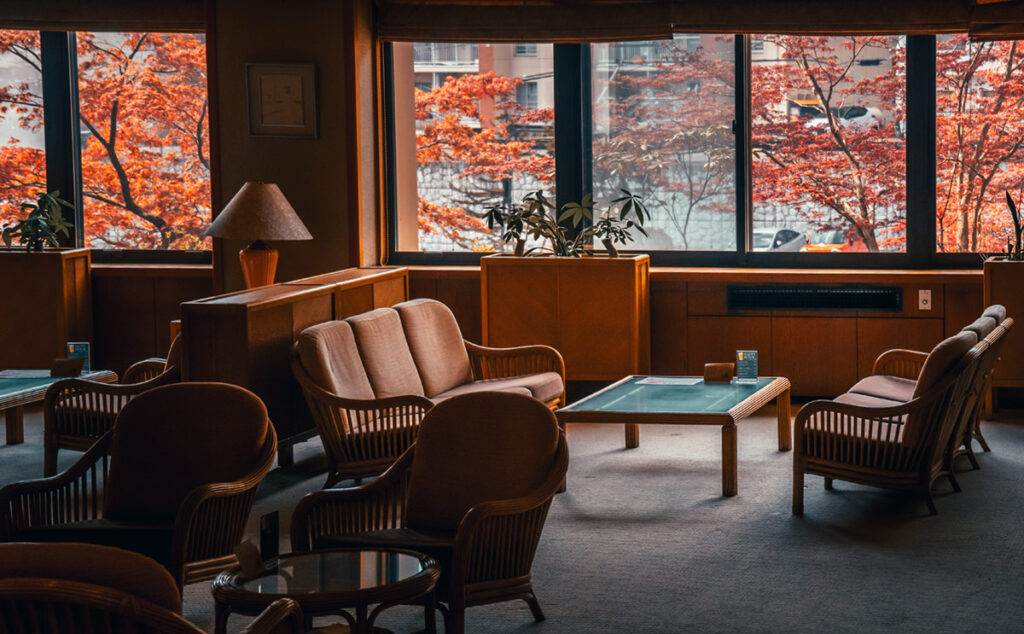
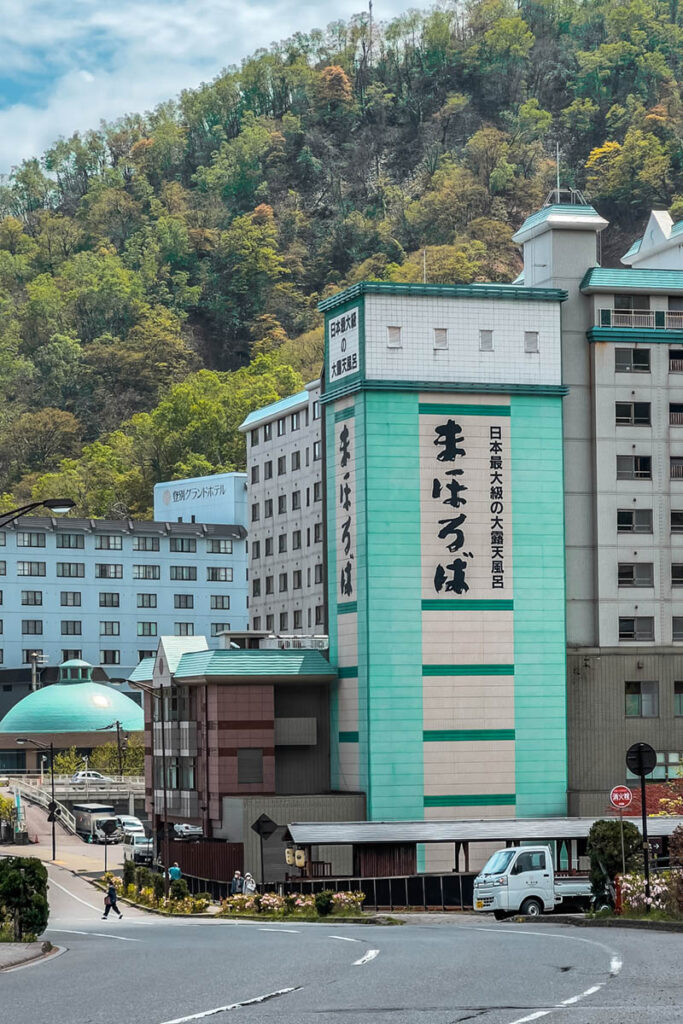
With more than 30 types of baths, Mahoroba is where variety rules. Shuffle between sulphur pools, outdoor stone tubs, and cypress baths before scarfing down lavish buffets stacked with crab and Hokkaido special seafood. It’s one of the largest Noboribetsu hotels, and is a lovely resort dedicated to the art of bathing. If you’re looking for a classic Noboribetsu onsen hotel, this is one of the most favored choices.
2. Dai-ichi Takimotokan

Noboribetsu’s flagship ryokan since the 19th century, Takimotokan is built directly above the source of Jigokudani’s springs. Its multi-floor bathhouse features Hell Valley views through floor-to-ceiling windows. Meals are classic kaiseki, and the sheer history of the property makes staying here a rite of passage for onsen fanatics.
READ MY FULL REVIEW OF DAIICHI TAKIMOTOKAN
When I visited, tattoos were allowed in the public baths, though it’s always best to confirm before booking. For extra privacy, the ryokan also has two rooms with their own in-suite onsens.
3. Noboribetsu Grand Hotel

Right in the middle of town, Noboribetsu Grand Hotel is a chill ryokan with all the conveniences of a modern property. With 35 different baths, including open-air pools set against stone gardens, there’s plenty of space for all guests, even during the high season. Among the many hotels in Noboribetsu, Hokkaido, this one is a great central option.
4. Takinoya

A more intimate, design-forward ryokan, Takinoya, is built around the concept of retreat. Rooms overlook forest or valley, private outdoor baths, and farm-to-table meals make it a favourite amongst couples or those seeking an upscale Noboribetsu Ryokan experience.
5. Oyado Kiyomizuya Onsen

For something less lavish but traditional, book Kiyomizuya. This family-run ryokan has tatami rooms, simple onsen baths, and home-style meals.
Guesthouse & Capsule Options
Budget travellers, I hear you. Sometimes, there’s no need to splurge when you’re going to be out exploring all day.

Noboribetsu has smaller inns and guesthouses where you still get access to the town’s springs. Some capsule-style options cater to solo travellers, while simple minshuku (family-run inns) give you futons, set dinners, and a taste of Japanese hospitality on a tighter budget. Noboribetsu Guest House AKA & AO would be my choice for a budget stay.
Best Time to Visit Noboribetsu Onsen
Winter is the classic season for Noboribetsu, when the entire onsen town turns into a snow globe. Steam curles into the icy air while snow piles on rooftops and tree branches. Sitting in an outdoor bath with flakes melting on your shoulders is one of those bucket-list Japan moments.
That said, Noboribetsu isn’t just for snowy trips. I went in May, and even then, the chill in the air made every soak restorative. Spring also brings fresh greenery around Hell Valley, adding a photogenic contrast to the sulphur vents. Summer is busy and full of festivals and fireworks. Autumn might be the most underrated time, with the surrounding forests erupting in red and gold.
If you want the quintessential “hell meets heaven” effect, go in the dead of winter. For lighter crowds and a more offbeat experience, shoulder seasons like May or late October are pretty great choices too.
Plan the Perfect 2 Days in Noboribetsu
If you’re heading to Hokkaido and want every hour to count, my 2-Day Noboribetsu Itinerary has you covered.
Inside this standalone mini guide ($9.99):
- A step-by-step weekend plan with exact stops and timings
- Map pins for Hell Valley, Oyunuma Pond, footbaths, oni statues, and more
- Ryokan and hotel suggestions with booking tips
- Veg-friendly food spots I actually ate at
- Seasonal notes so you know what to expect year-round
I’ve taken the guesswork out so you can just show up and enjoy the town.
👉 [Sign up for the waitlist for the Noboribetsu 2-Day Itinerary – $9.99]
How to Get to Noboribetsu
How to get to Noboribetsu Station from Sapporo, Hokkaido
By Train
Take the JR Limited Express Hokuto from Sapporo Station to Noboribetsu Station (about 1 hr 15 min, ¥4,780).
By Bus
Another budget-friendly option is the Chuo Bus from Sapporo Eki Mae to Noboribetsu (¥2,280). Tickets can be bought at the Sapporo bus terminal either with a card at the counter or with cash at the ticket machines. On certain routes you board from the back, take a small paper ticket from the dispenser, and pay the fare shown on the board when you exit. From the bus stop in Noboribetsu, it’s just a short walk to Noboribetsu Station.
From New Chitose Airport
Direct limited express trains connect New Chitose Airport to Noboribetsu Station in roughly one hour (¥1,880), making it one of the easiest hot spring towns to pair with a flight in or out of Hokkaido.
How to get to Jigokudani Hell Valley from Noboribetsu Station
From Noboribetsu Station, hop on a Donan Bus bound for Noboribetsu Onsen (15 min, approximately ¥400). Or, take a taxi if you don’t mind paying extra. Both drop you off in Noboribetsu Onsen Town, right near the trail to Hell Valley.
Direct Bus from Sapporo to Noboribetsu Onsen / Hell Valley
Donan Bus runs one direct service daily from Sapporo Eki Mae (Stop No.7) at 1:40 pm, arriving in Noboribetsu Onsen in just under 2 hours. Fare: ¥2,500. Departures are limited but this route skips the train transfers.
By Car
Driving from Sapporo takes about 1 hr 40 min. Expect highway tolls to be around ¥3,000.
Things to Know Before You Visit Noboribetsu
- Sulphur Smell Hits Hard
Hell Valley lives up to its name in one way, in the sense that the air is thick with sulphur. As soon as you reach Noboribetsu you can smell it. First-timers should be prepared for that eggy punch to the nose. - Walkable Shoes
The boardwalks and trails around Jigokudani are easy to follow, but they can get slippery in rain or snow. Bring proper walking shoes, suitable for the terrain. - Yen or Card?
Larger hotels and some restaurants accept credit cards, but smaller shops and snack stalls often don’t. Keep some yen on hand, especially coins for vending machines near the trails. - Solo Traveller Notes
If you’re on your own, don’t stress. Onsen scene in Japan makes solo bathing totally normal. Some ryokan meals are set for two or more so eating alone might get tricky. Look for places with casual ramen or soba counters if you’d rather not do the full kaiseki spread alone. - Packing Tips
Bring a small towel (many hotels provide them, but it’s handy to have your own for footbaths). Only pack a swimsuit if you plan on using a hotel pool as onsen baths are almost always nude.
Noboribetsu Onsen is strange, dramatic, and full of character. This hot spring town feels nothing like the polished resort image you might expect. Come to the Hell Valley for hikes, the ryokan baths, or just to wander foggy streets with demon eyes following you from every corner.