I spent a total of 1.5 months in Ehime Prefecture long before the Ehime Jelly Orange went viral. Back then, I knew it as a locally beloved slice of northwestern Shikoku Island, with stunning coastlines, idyllic pockets of nature, warm-hearted residents, and more citrus than you could ever fit into a stack of Muji suitcases. Matsuyama Castle towered above the city, and cinematic train rides through the countryside felt straight out of a film.
Still, Ehime is excluded from the itineraries of travelers heading to Japan.
But thanks to that glossy jelly orange trending across Japanese Twitter and TikTok, the spotlight has finally landed on this underrated gem. And honestly, it’s about time.
With so much to see and so little information available online, I felt compelled to share my experience in this magical prefecture. In this guide, you’ll find the best things to do in Ehime, tips on how to get around, what to explore, and where to find vegetarian food and of course, where to buy Ehime jelly oranges.
Climb aboard and let’s get to know the prefecture and the many things to do in Ehime, Japan
Ehime Jelly Orange: The Citrus Craze
Don’t be confused by the name, Beni Madonna, better known as Ehime Jelly Orange, isn’t an American pop star-themed product. It’s a rare winter citrus grown in Ehime Prefecture, and it might just be the juiciest, glossiest orange you’ll ever taste. With deep vermillion flesh, an almost melt-in-your-mouth texture, and barely a hint of bitterness, it’s no surprise this fruit has become a bit of a sensation.
Ehime’s endless sunshine, controlled greenhouses, and insanely skilled farmers deserve a lot of credit. Beni Madonna orange is seedless, low in pith, and so tender-skinned that it easily gets a bruise. So, the farmers even dust the Japanese orange trees with fine kaolin clay to protect them from bugs and sunburn.
They’re harvested only in December, and it’s all done by hand. Each fruit is checked for size, color, and sweetness, and only the best ones can officially be sold as Beni Madonna.
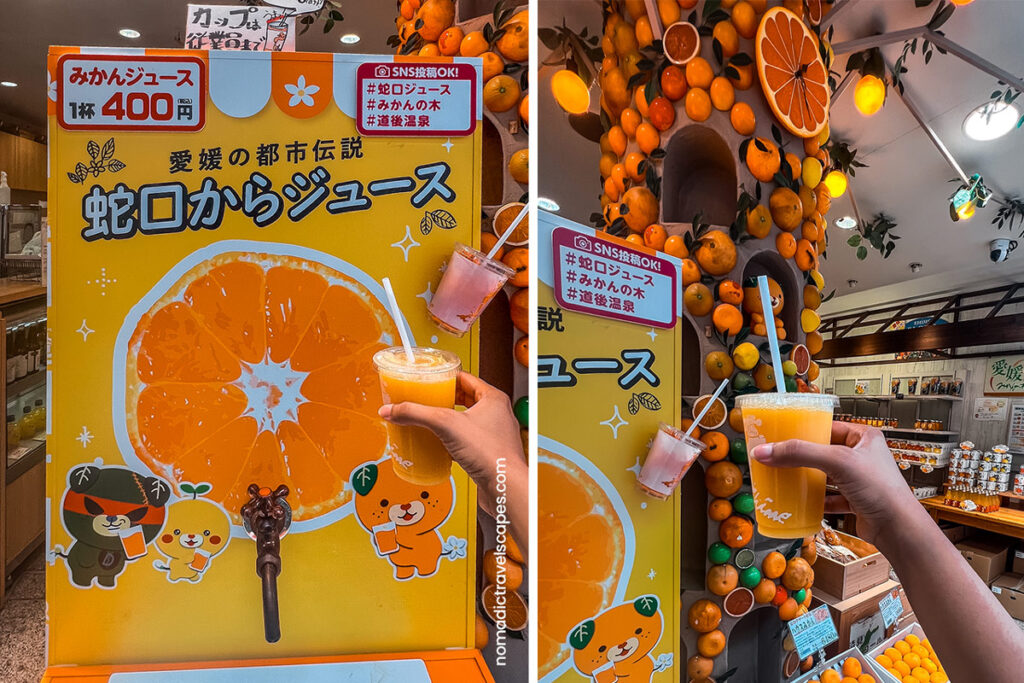
Expect to pay a hefty price tag, but I promise you, they are worth every yen. I made the rookie mistake of skipping them after downing three cups of fresh orange juice the same day I spotted them in Dogo Shopping Street in Matsuyama. I’m absolutely going back to Ehime to sample some delicious Japanese jelly oranges this winter.
Outside Ehime, prices for Beni Madonna climb even higher. So don’t be like me! If you spot one while in Ehime, grab it.
Where to Buy Ehime Jelly Orange
You’ll usually spot them packaged individually, sold in luxe gift boxes at department stores or fancy fruit shops. Places like Isetan, Mitsukoshi, and Takashimaya in Tokyo carry limited stock during peak season. If you’re lucky, you might catch a few at specialty grocers or even online.
Tip: Chill your Beni Madonna before eating, slice it gently with a sharp knife, and if you’re taking photos, wait for golden hour! That sunset light makes the orange flesh literally shimmer.
Other Citrus Worth Trying in Ehime:
- Iyokan – bright, floral, with a tart finish
- Setoka – super sweet and seedless
Citrus Snacks to Eat in Ehime
Even if you miss Beni Madonna season, Ehime’s citrus obsession runs year-round. Known as one of Japan’s top mikan-producing regions, the area turns its surplus harvest into an entire category of snacks and pantry items.
- Yuzu Kosho: a spicy citrus paste made with chili and yuzu zest
- Beni Madonna Juice Set: Matsuyama has plenty of orange juice dispensers but if you’re somewhere else in Japan, order this online to taste Ehime jelly oranges in the form of juice.
- Mikan Peel Candies: chewy or sugar-dusted, often sold at station kiosks.
Prefer to order it once you get home? Sakura.co sells a delicious version of the Mikan peel candies. - Citrus Craft Sodas: citrus based sparkling drinks
- Japanese Citrus Vinegar: used in salad dressings and cocktails
- Yuzu Bath Salts & Skincare: local hot spring shops often stock citrus-scented products
These make easy gifts or souvenirs. You’ll find them at Dogo Onsen’s shopping arcade, souvenir shops at Matsuyama Airport, local stores in other cities, or online on Amazon Japan.
If you’re back home but craving real flavors from Japan, purchase a Bokksu subscription. Each month, you’ll get a themed box of delicious goodies straight from The Land of the Rising Sun.
Matsuyama’s Dogo Onsen – Japan’s Oldest Hot Spring Bathhouse
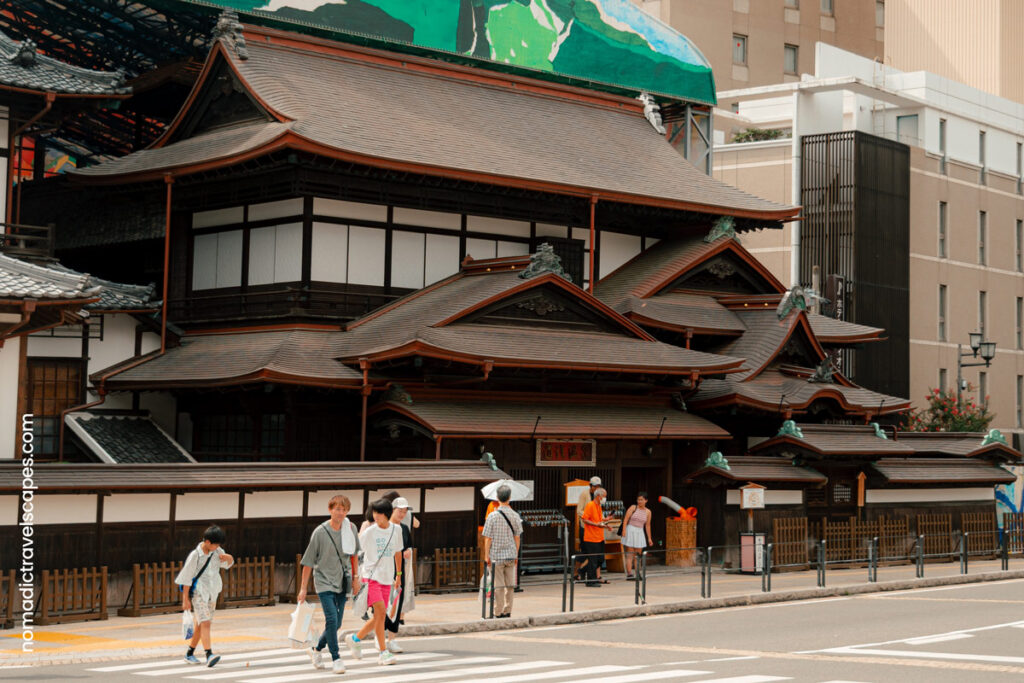
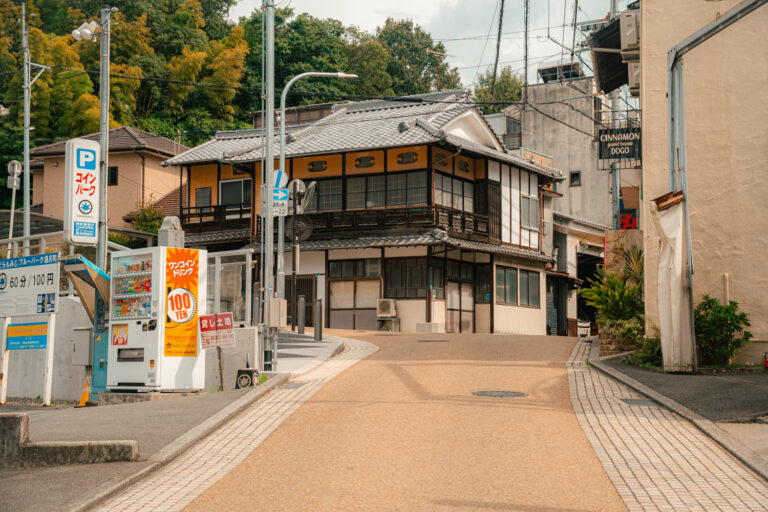
Ehime is split into three regions: Toyo, Chuyo, and Nanyo. Dogo Onsen is situated in Chuyo, tucked in the main thoroughfare of Matsuyama City’s Dogoyunomachi, surrounded by sleepy alleyways and retro cafés. I’ve soaked in onsens umpteenth times, but nothing comes close to the atmosphere at the legendary Dogo Onsen.
The Honkan (main bathhouse) was under renovation when I visited, but despite the covering, even from a distance, it was impossible to miss. Its multi-layered wooden structure and elegant design rises above the street like something out of a dream. Fans of Spirited Away have long pointed out the similarities, believing this very bathhouse inspired Yubaba’s maze-like inn. And as I stepped inside, that connection felt hard to ignore. Unfortunately, taking photos instead isn’t allowed.
To manage the crowds, Dogo Onsen limits the number of tickets available each day. You can drop by early to reserve a spot for later or head straight there in the morning if you want to soak right away—especially if you’re aiming for the main bath on the ground floor.
Entry is ¥700 for a one-hour session, which is more than enough given how hot the water gets. If you didn’t bring your own, yukata and towel rentals are available for an extra fee.
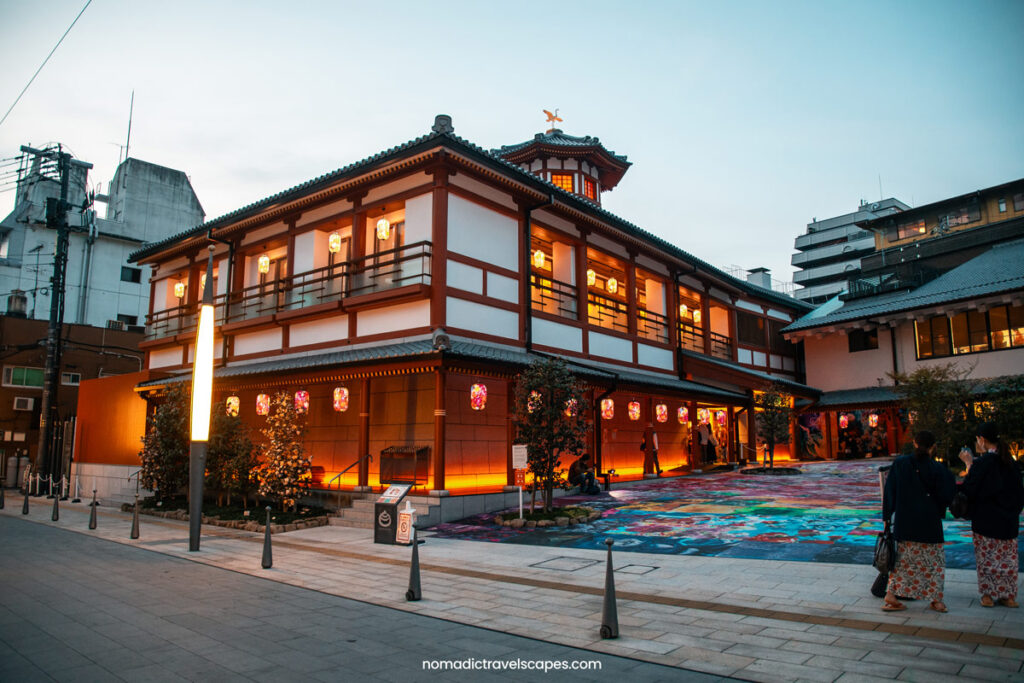
As of mid-2024, the renovations are complete, and the Honkan is fully reopened. If you’re looking for alternatives or want to try a second soak, check out Asuka-no-Yu, a newer and slightly more modern option just nearby, or Tsubaki-no-Yu, which has a more relaxed, local feel.
Etiquette Tips: Swimsuits are not allowed. Rinse thoroughly before entering the water. Visitors with Tattoos are welcome, but it’s best to check signage or ask at reception.
Also Read: Full Review of onsen hotel Dai-ichi Takimotokan in Noboribetsu, Hokkaido
Matsuyama Castle
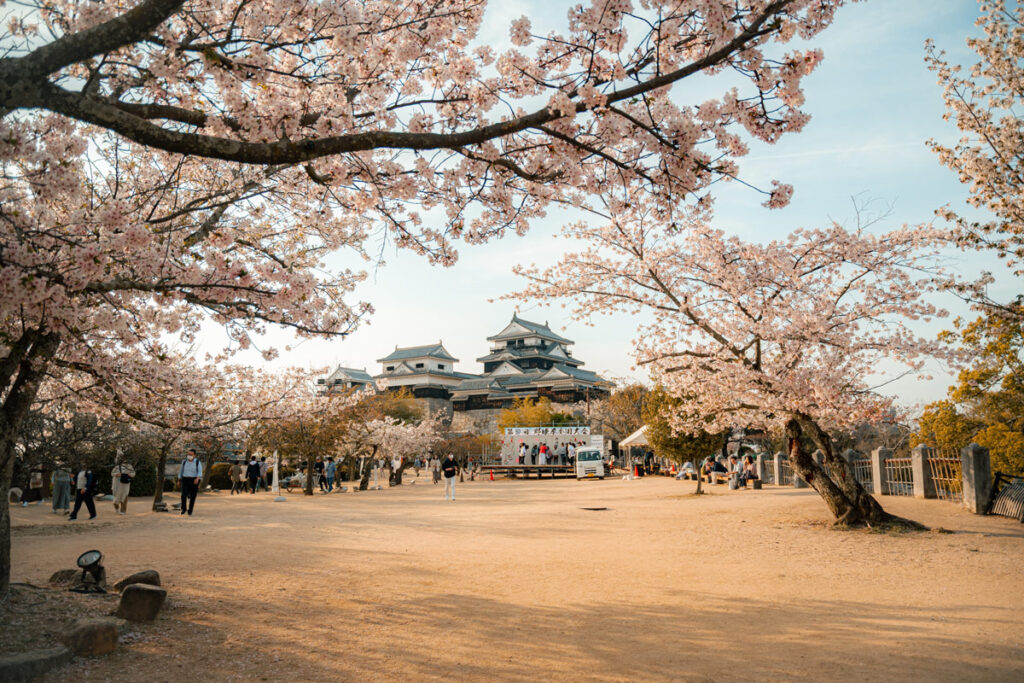
Locals from all over the country make long trips to visit Matsuyama Castle, a grand piece of history watching over the city for centuries. Sitting on a high hill, Matsuyama Castle is one of the few fortresses that survived the days of war.
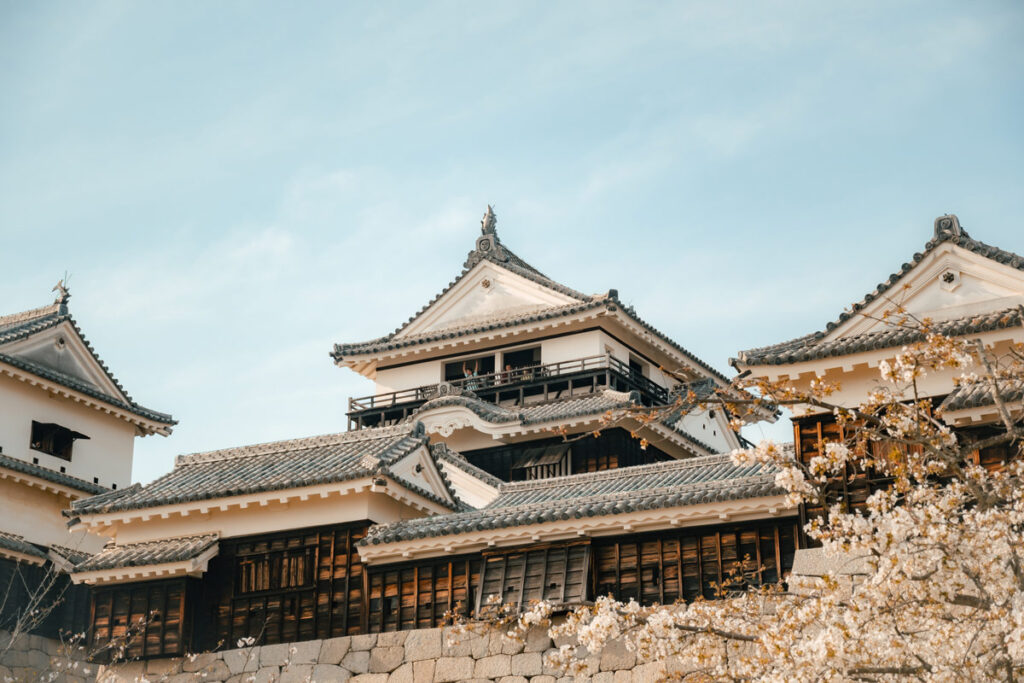
History buffs will love it for its past, and everyone else will deeply enjoy taking the ropeway and taking in the spectacular views as far as the Seto Inland Sea from up top.
I went during the Sakura season, and the cherry blossoms made the whole visit feel surreal. I ended up spending six hours there, wandering through the creaky wooden interiors, eating sakura ice cream, and somehow finding myself at a Shiba inu contest on the castle grounds.
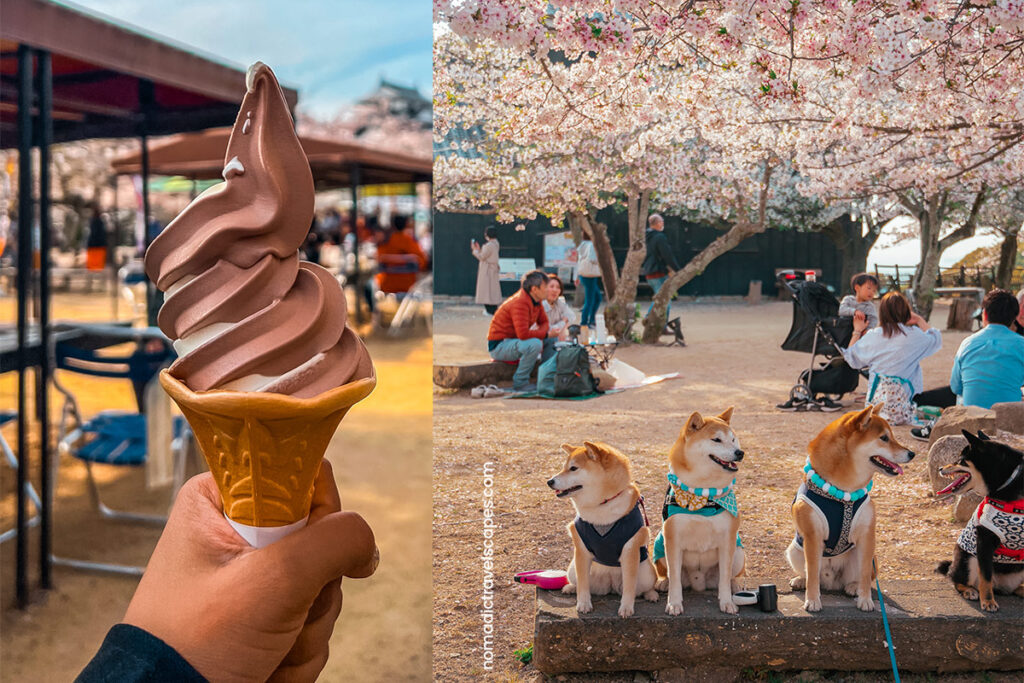
Try to visit during cherry blossom season, or at least aim for a late afternoon visit. The light softens, the crowds thin out, and the castle feels even more photogenic.
See a Pastel Sunset at Shimonada Station
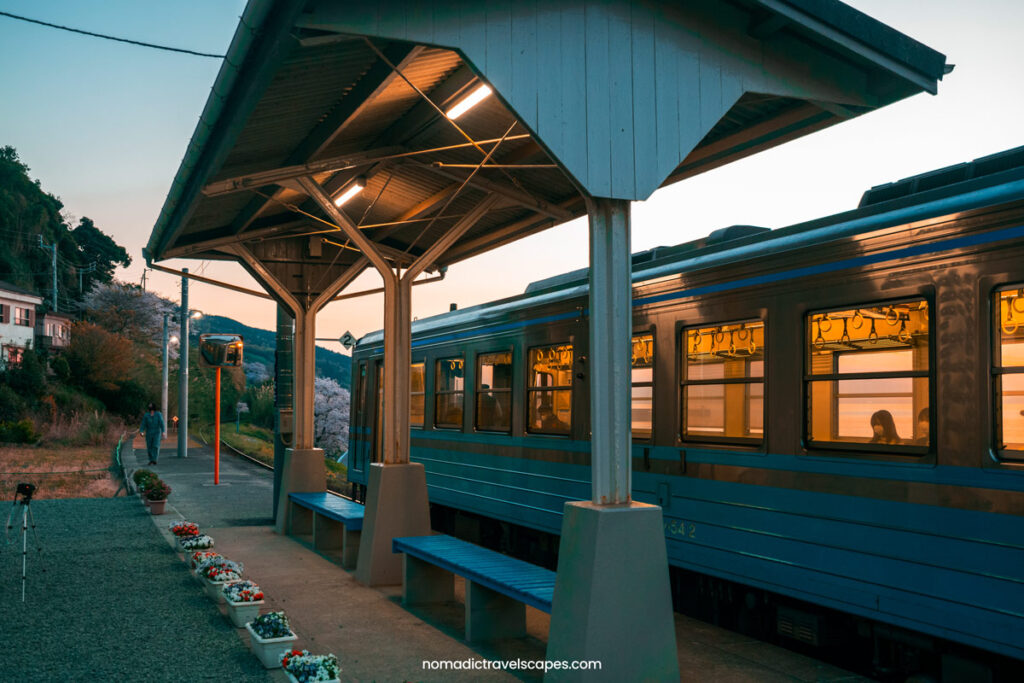
Jump on a train from Matsuyama Station and make your way to Shimonada Station on the Yosan line. Any guesses for the attraction we’re heading to? The station itself! Yup, only in Japan can a train platform be such a spectacular sight that it’s worth the trip.
Take a window seat on Japan’s seaside train and watch how quickly the residential neighborhoods give way to the open waters. As the train curves along the coast, it starts skimming the edge so closely, it feels like you’re riding straight into the water. I was reminded of the Spirited Away train scene where Chihiro and No Face sit side by side when they go off to meet Zeniba.
In less than 70 minutes, you will arrive at Shimonada Station. This scenic little seaside platform is best visited at sunset. Time it right, so that when the train pulls in with the sun dipping into the horizon behind it you can experience the surreal scene. It’s so dizzyingly beautiful and uber-photogenic, it feels unreal.
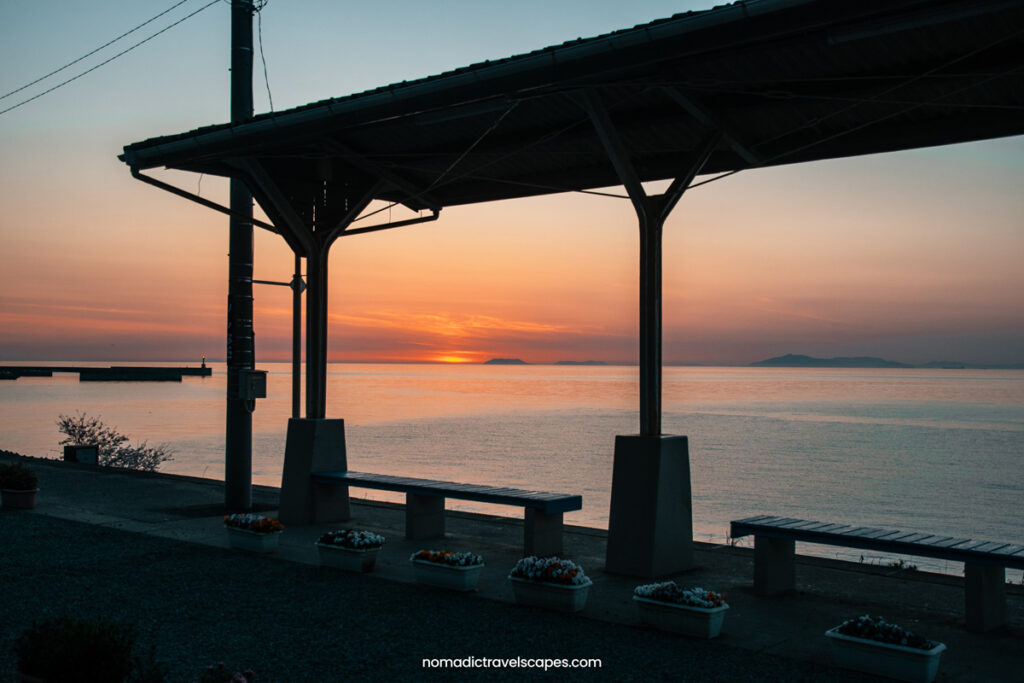
There’s usually a pop-up café nearby. Grab a chilled Ehime jelly orange juice (yes, more citrus) or a coffee and sit with it and take in the seaside views.
I felt like I’d been dropped into an anime. In fact, Kyokai no Kanata (Beyond the Boundary) and Nekomonogatari (Kuro) both feature the station in their show.
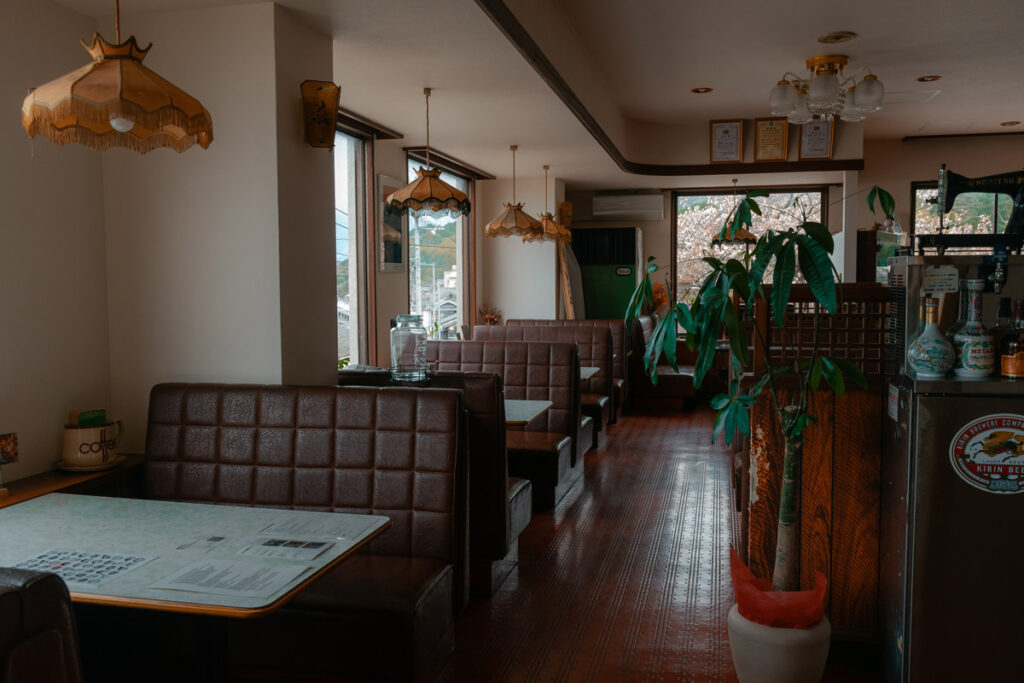
You can visit Shimonada on a day trip from Matsuyama, but if you have time, stay a little longer. The whole area carries magic, especially at sunset and after dark.
I ended up staying a week at Guesthouse Popeye 海に恋する泊まれる喫茶店 ポパイ, a seaside guesthouse near Iyo-Kaminada Station. In that blissful time, I took slow trips up and down the coast, got on and off at random stations, and met the sweetest locals and tourists.

Book this beachfront hostel in Ehime now!
Stroll the Edo-period streets of Uchiko
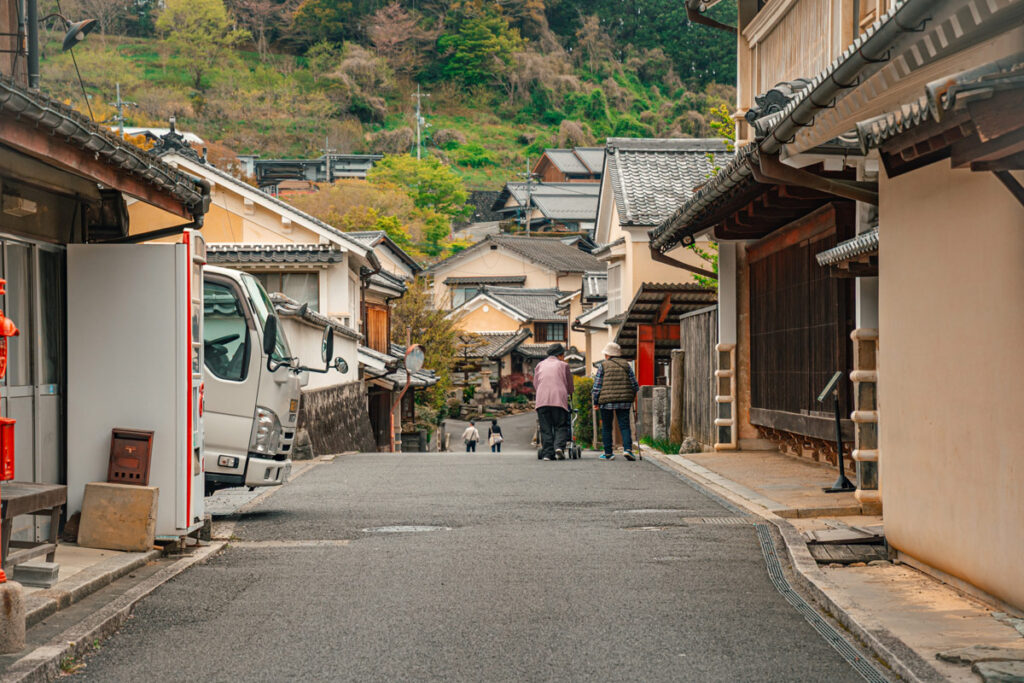
One of the towns I visited while living in Iyo was Uchiko. I only stayed a night, but I completely fell for its old merchant streets, sweeping views over the graveyards, and, as always, the kindness of the local people.
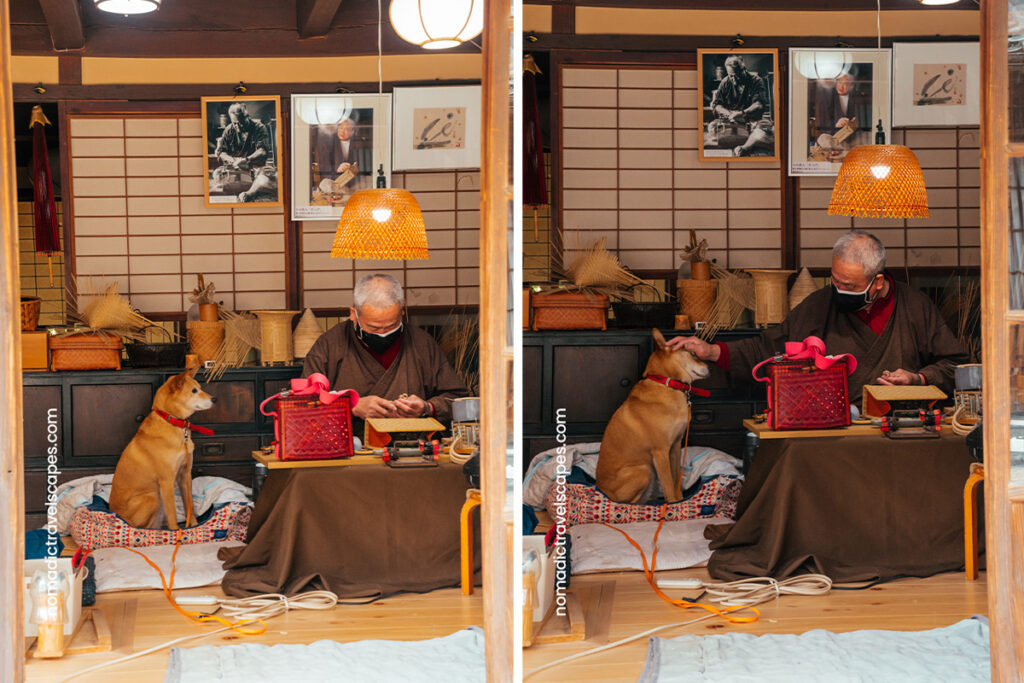
Camera in hand, I wandered around without a plan. The first stop happened by chance—a craftsman and his shiba inu sitting on the porch of their workshop. I said hello, and he immediately welcomed me inside, happy to let me take a photo of him and his furry companion.
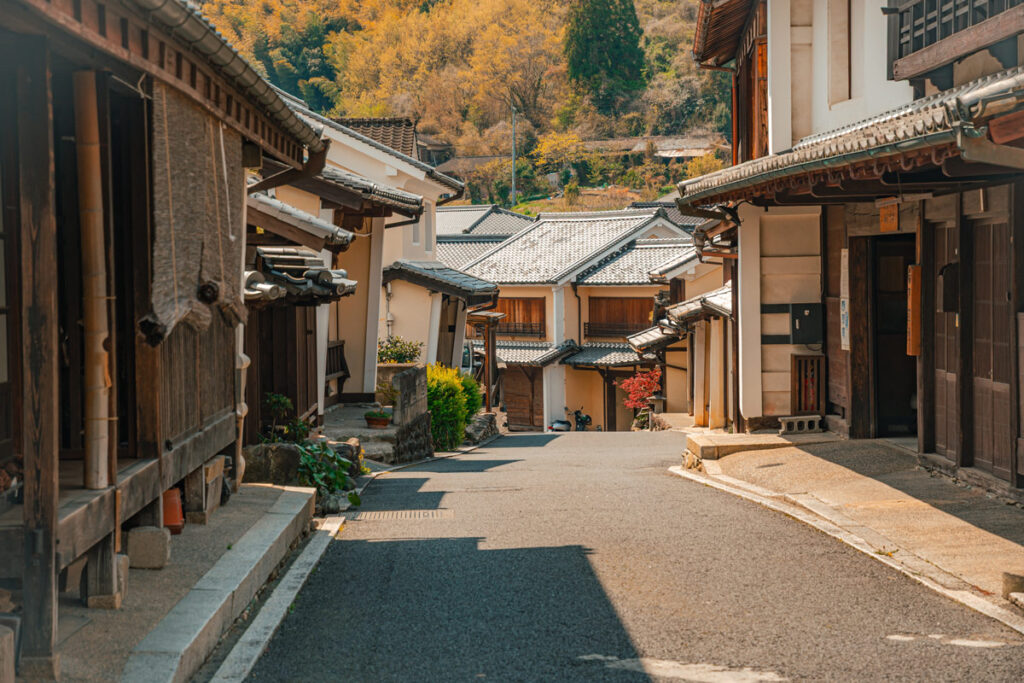
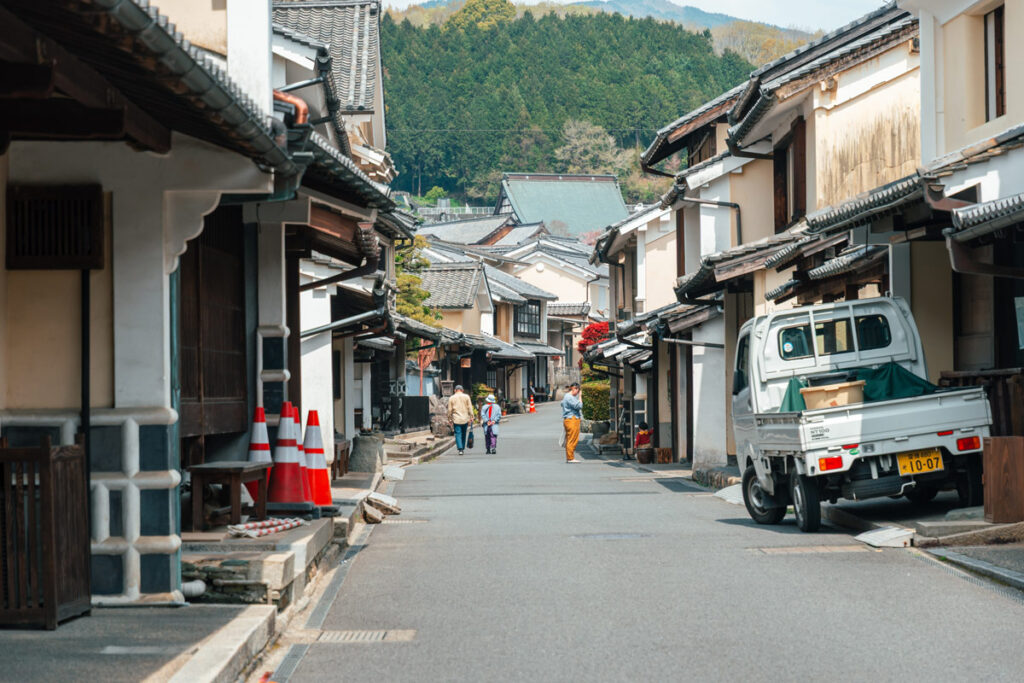
A few steps later, I was walking through Yokaichi and Gokoku districts, past rows of dōzō-zukuri buildings with thick plaster walls and wooden lattice windows that looked like they hadn’t changed in a hundred years.
Continue walking on the main thoroughfare to reach Kosho-ji temple and walk even further up to admire hillside graveyards. I loved ducking into tiny cafés set inside former warehouses, where the light slants through paper lanterns and the air smells faintly of roasted coffee and aged cedar.
Make time to visit the Kamihaga residence, a restored home and lacquer workshop. When your legs need a break, grab a cup of Uji-cha green tea ice cream or Japanese jelly orange juice from a street stall and sit under the Sanbon-sugi cedar tree.
If you’re up for a walk, head over to Restaurant KaRari and try the vegetarian tempura noodle set. It’s ridiculously good, and the lush greenery all around is just as impressive.
Before leaving Uchiko, check out this beautiful Japanese paper shop or buy handmade candles and hand-forged traditional candle holders at Omori Warosoku Candle Shop.
I spent the night at Hostel & Tatami Bar Uchikobare. The owner turned out to be best friends with the host from my Iyo-Kaminada guesthouse and offered me early check-in and late check-out. It was peaceful, moody, and exactly what I needed. Stay there if you can.
Klook.comMitsuhama Port
Not many people venture west from Matsuyama, but you should. Mitsuhama Port is a quiet pocket of sea, sun, and slow cycling. Ride past old wooden houses, watch fishing boats drift in and out, and stop for coffee at one of the retro cafés scattered around the area. There aren’t any big attractions here, or at least I wasn’t chasing any. I was perfectly happy biking willy-nilly, soaking in the silence, and heading back to Matsuyama once my legs started to ache and Dogo Onsen’s hot water was calling my name.
Spend a Day in Imabari, Ehime Prefecture
As the gateway to the Shimanami Kaido cycling route, cyclists know all about it, but there’s tons to see for touristy folks too.
Start your day at Imabari Castle, a stunning hilltop fortress with a rare saltwater moat. Walk around the castle before heading to the moat’s edge and spotting sea birds drifting on the brackish water.
When I lived on Ōshima Island—one of the smaller inlets in the Seto Inland Sea—I visited Imabari with a friend, since it was only a short drive. After the castle, we grabbed a red bean taiyaki from a nearby stand and ate it while people-watching. Compared to Osaka or Tokyo, it’s a slow, quiet city, but still pretty cool to visit.
Drop by the kitschy Towel Museum, which showcases Imabari’s towel industry through cool exhibits and larger-than-life textile installations. There’s even an entire section dedicated to pop culture characters like Moomin and Winnie the Pooh made from towel fabric. Stop by the gift shop and pick up a soft Imabari towel to take home.
If you’re into seafood, try the shiokara udon. My friend said it was the best dried cuttlefish he’s ever had. If you’re vegetarian like me, go for snacks like crispy potato croquettes and wash them down with a cold yuzu soda or hunt for Ehime jelly orange juice.
Cycle Through Shimanami Kaido
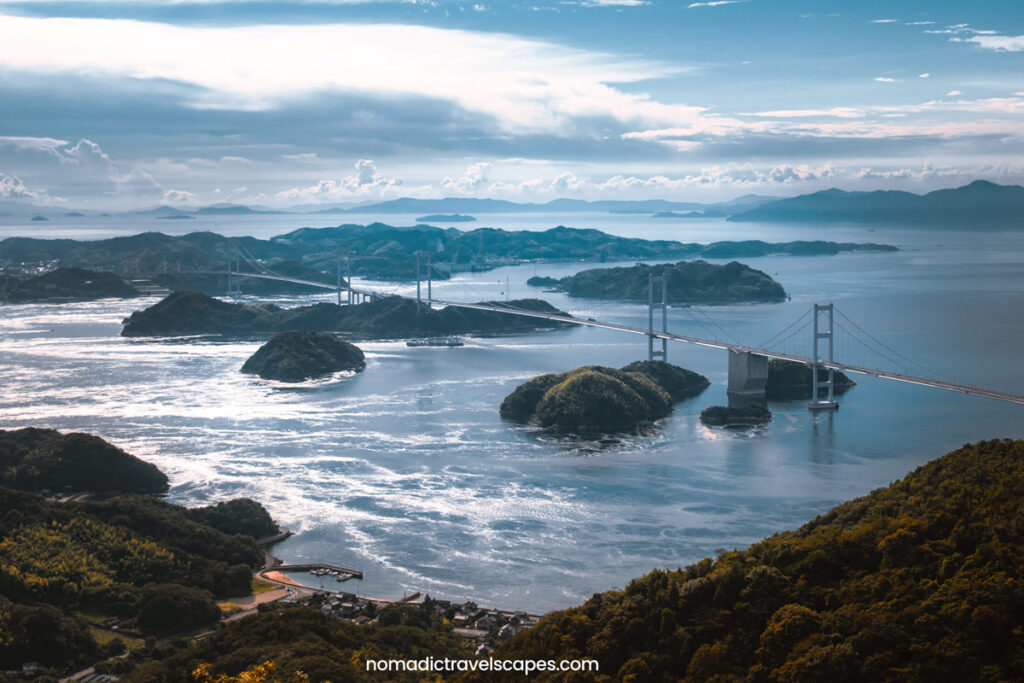
Head to the Kurushima Strait and experience the glory of Shimanami Kaido for yourself. Imabari city is the starting point of this cycling route, which connects Shikoku to Honshu across seven bridges and a chain of small islands—some part of Ehime, others falling under Hiroshima. The road passes through quiet fishing villages, curving coastal paths, and long stretches of sea views, making it one of the most memorable bike rides in Japan.
I had the privilege of living on one of the smaller islands in the strait for a full month. In Ōshima Island, my tiny village of Hayakawa with fewer than 100 people, felt like its own little world. Living there changed my life!
Almost daily, I cycled from one island to another, swam in translucent beach waters, and spotted plenty of jellyfish. Even riding across a single bridge gave me open views of the Seto Inland Sea, peaceful roads that felt like something out of an anime, and too many photo stops to count, especially for the cats lounging near vending machines.
Each island has rest spots with drinks, snacks, and shaded benches, so you can go as slow and as far as you like. I couldn’t spot any Ehime jelly orange being sold in the area but I was there in August instead of the recommended month of December.
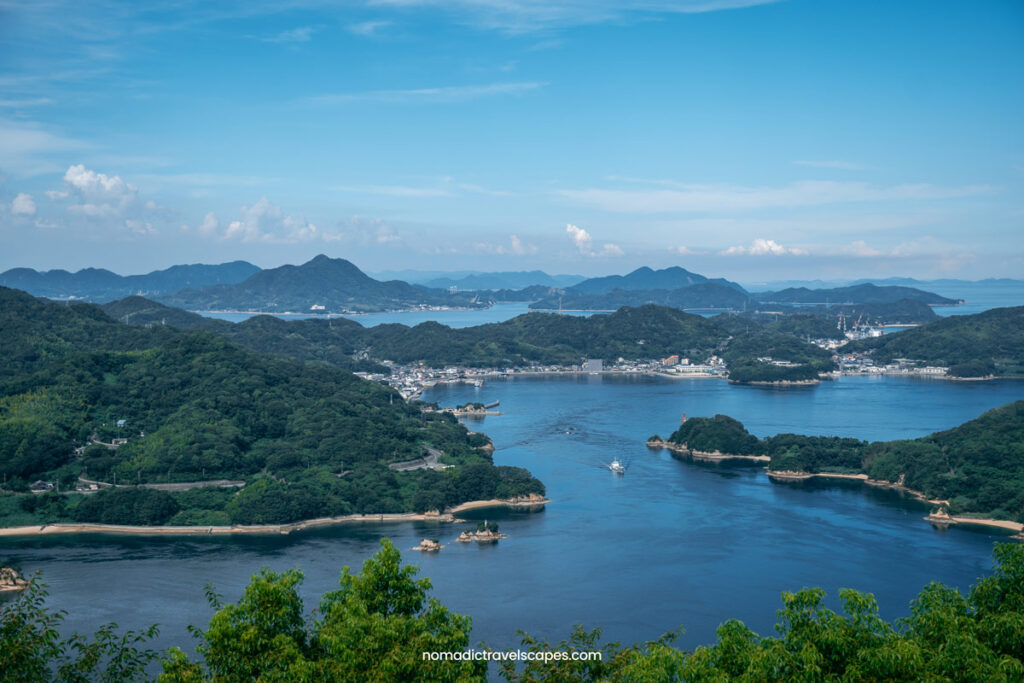
Ōshima is worth visiting for the views from Kirosan Observatory Park, and nearby Hakata Island has a swimmable beach and access to Setonaikai National Park. Onomichi, the last town on the route, is spectacular too, with plenty of eateries, and scenic views.
Even if you’re not an experienced cyclist, renting a bike for just part of the route is completely worth it, to take in the glorious shades of blue water below.
Vegan or Vegetarian Food in Ehime
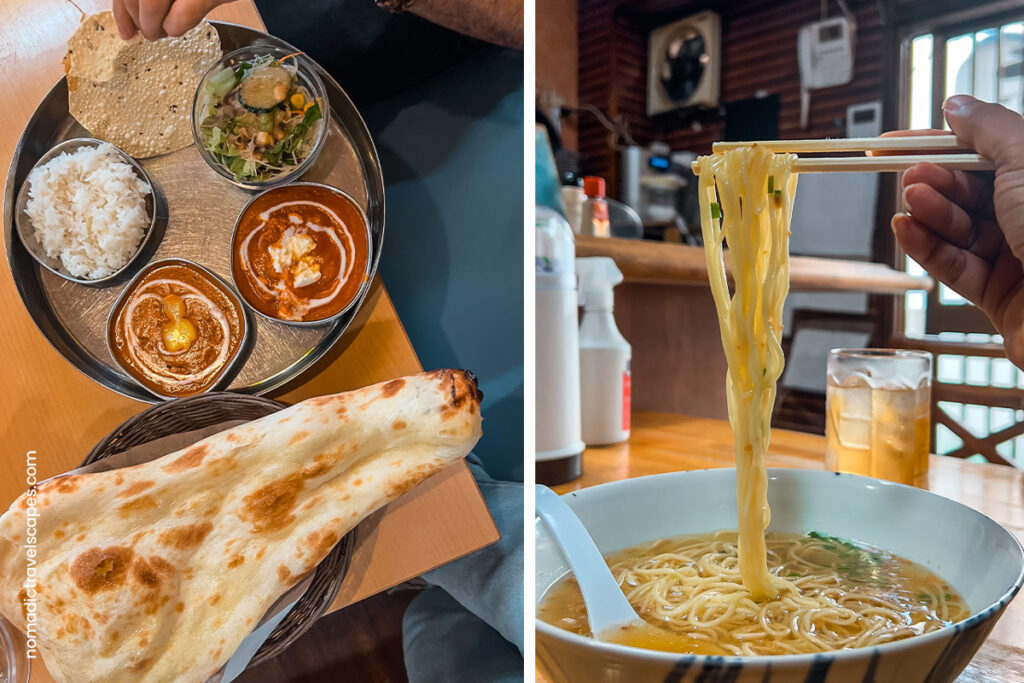
Aside from the gleaming Ehime jelly orange and the sweet Ehime tarte, we vegetarians won’t find a ton of local specialties to try. I usually hunt down an Indian restaurant or make a meal out of small bites from kombinis. When I can’t find anything clearly vegetarian, I ask local ramen shops to make a bowl without meat or fish flakes. It still usually ends up being a chicken or fish-based broth, so if that kind of flexibility doesn’t work for you, look for a Buddhist temple. They tend to serve simple vegan meals. Otherwise, I’d stick to one of the restaurants that list proper vegetarian options.
📍 Matsuyama City
ナマステ食堂 (Namaste Shokudo)
If you’re craving Indian food near Matsuyama Castle, this cosy spot hits the mark. Great for vegetarians, with familiar comfort dishes like dal, veggie curry, and naan.
Pepps on the Table
A stylish café offering local-style meals with veggie-friendly options like quiche, croquettes, fresh salads, and desserts worth the extra calories.
📍Imabari City
BetoLabo
Vietnamese banh mi sandwiches with mouthwatering veggie versions. A great casual lunch stop in Imabari City after castle hopping.
Kaze No Restaurant
Right along the Kurushima Strait near the start of the Shimanami Kaido. Go for the cheese pizza, panna cotta (containsegg), and seasonal house sodas.
📍Uchiko
Uchiko Fresh Park KaRaRi
Along the riverside, fresh Park KaRaRi is a modern roadside station in Uchiko with a sunny farmers’ market and a modern restaurant serving up fresh local produce, handmade udon, tempura, and seasonal fruit desserts.
Where to Stay in Ehime
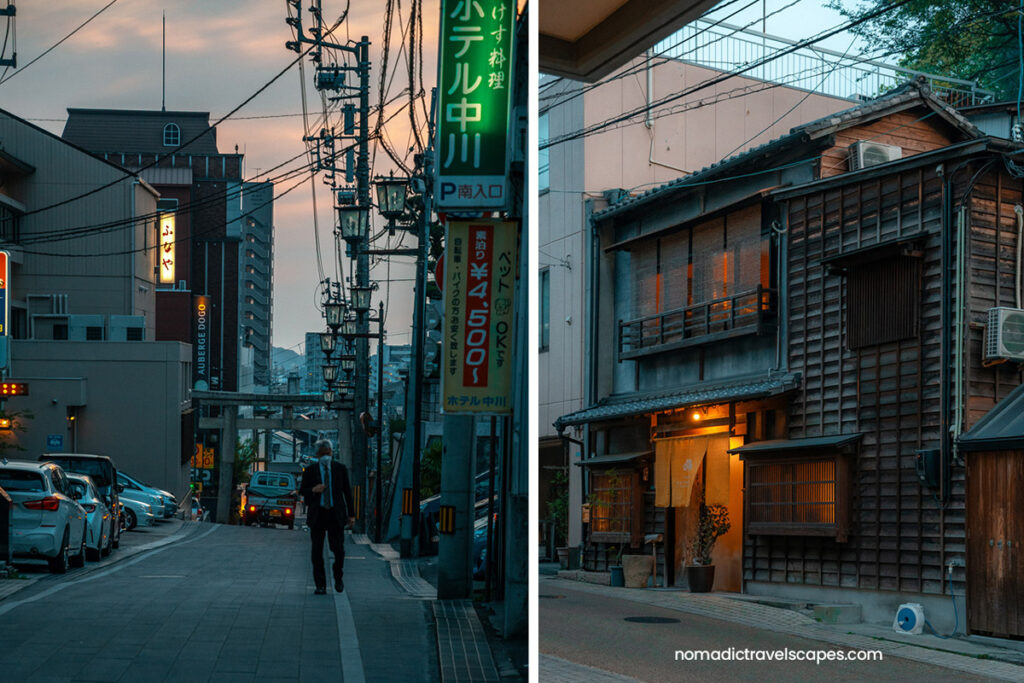
Matsuyama City
Klook.comDormy Inn Matsuyama
Whenever I want more comfort than a hostel but don’t feel like splurging, I look for a Dormy Inn. The one in Matsuyama has a rooftop onsen, which feels like heaven after a long day of walking. Rooms are snug but immaculate, and they serve free late-night ramen, which always feels like a random yet lovely reward.
REF Matsuyama City Station by Vessel Hotels
Right next to the station, REF gets the necessities right. Rooms are clean, modern, and not too flashy. The breakfast spread is yummy, and its location is perfect if you’re getting in late or need to catch an early train without stress.
ANA Crowne Plaza Matsuyama
Big hotel comfort with soft beds, working air-con, and wide city views, the ANA name never fails. It’s on the pricier side but excellent if you want space and silence.
Dogo Onsen Area
Klook.comCinnamon Guesthouse
With no-frills but comfortable dorm rooms, fast Wi-Fi, free green tea in the lounge, and an owner who could easily moonlight as a comedian, Cinnamon in Matsuyama has been one of my all-time favorite guest house stays. The owner’s daughter made me stickers while I was working in the shared space, which completely won me over.
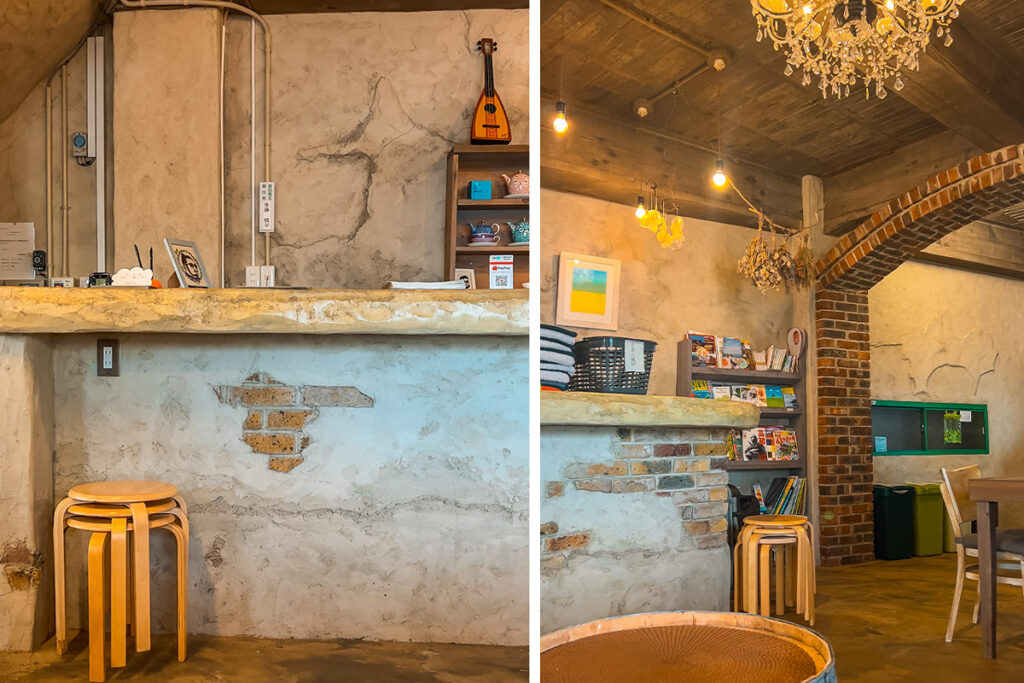
They’ll even prep a towel basket for you if you’re heading to Dogo Onsen.
Next door, you’ll find ラーメン NORI, known for its salt ramen and cold beer. Just note that the broth is made with chicken stock.
Dogokan
For a stunning, modern ryokan stay, just a short walk from the main bathhouse, book Dogokan. Rooms come with private open-air tubs, an aesthetic tea room, and brilliant design throughout.
Funaya
Spend a night in Funaya, a historic ryokan with deep roots in Dogo’s onsen culture. Expect cypress baths, tatami rooms, and a lovely garden.
Iyo City
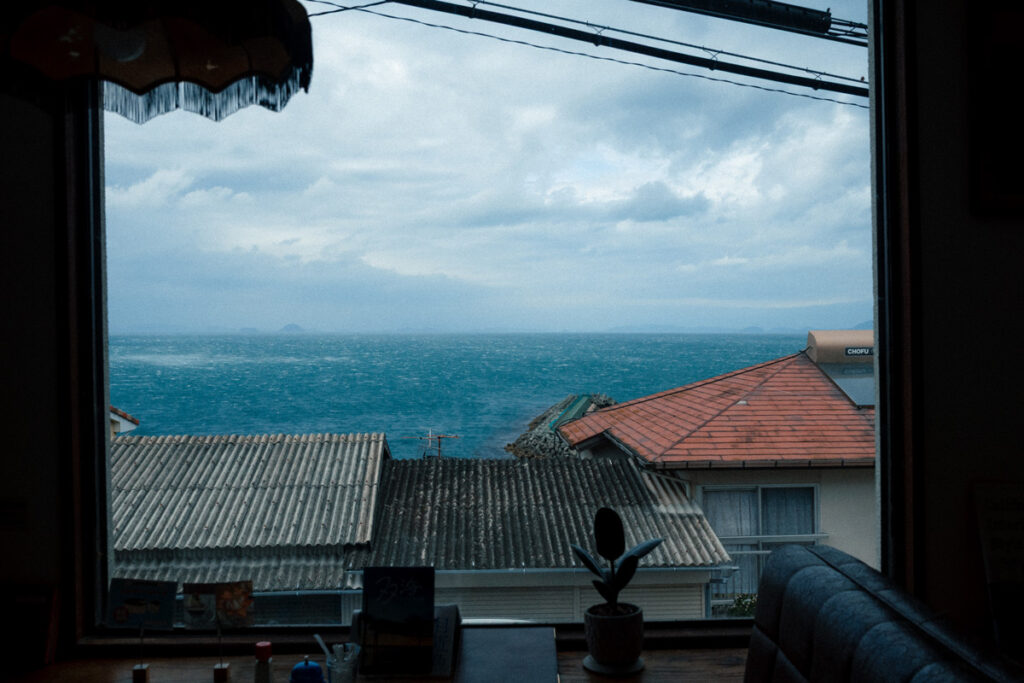
Guesthouse Popeye 海に恋する泊まれる喫茶店 ポパイ
Located in Iyo City, steps from Iyo-Kaminada Station, Popeye is a quirky, lived-in guesthouse that’s full of heart and vibe. The owners are kind, the design is retro, and it’s great for slow travellers. There’s a shared kitchen, and it’s a good base if you’re exploring nearby coastal spots like Shimonada Station.
Book Guesthouse Popeye 海に恋する泊まれる喫茶店 ポパイ
If you’re planning to do the full Shikoku 88 Temple Pilgrimage, look up the Henro House Project. These guesthouses are set up for pilgrims and usually have shared kitchens, so you can cook your own meals. A good option if you’re vegetarian and want to make use of local produce without stressing over fish flakes in your food.
How to Get to Ehime, Japan
Depending on where you’re coming from and where you’re headed within the prefecture, you can reach Ehime by train, bus, or flight. From Okayama, take the JR Shiokaze Limited Express to Matsuyama. It’s a scenic 2.5-hour ride through the western side of Shikoku. If you’re coming from Tokyo, Osaka, or other major cities, you can fly directly to Matsuyama Airport with airlines like ANA, Peach, or Jetstar. Flights are usually affordable if you book early and don’t mind flying light.
Best Time to Visit Ehime Prefecture
Late autumn (November to early December) is the peak citrus season, with markets full of fresh mikan and Beni Madonna / Ehime jelly orange. Early spring brings cooler temperatures and blooming plum blossoms, perfect for long walks and onsen nights. Wanna photograph shades of azure and take in island views? Summer is unbeatable for exploring the Shimanami Kaido. Just know it gets hot, so prioritize hydration.
I was in Matsuyama and Iyo in January and lived on the Seto islands in August. The chilly winter nights and crazy summer heat couldn’t been more different, but both were completely worth it, especially those ocean views after a long ride.
Book The Trip to Eat Ehime Jelly Oranges
If you’re going to try Ehime jelly orange, do it right. Buy one near Matsuyama Station, eat it cold, and let it ruin all other oranges for you. Spend a few winter nights in Matsuyama City, soak in Dogo Onsen, and catch the sunset at Shimonada Station with orange juice in one hand and nothing on your mind.
And when the craving for Ehime flavours hits again, grab a Bokksu Box, or just book another flight back to Japan.
Klook.com